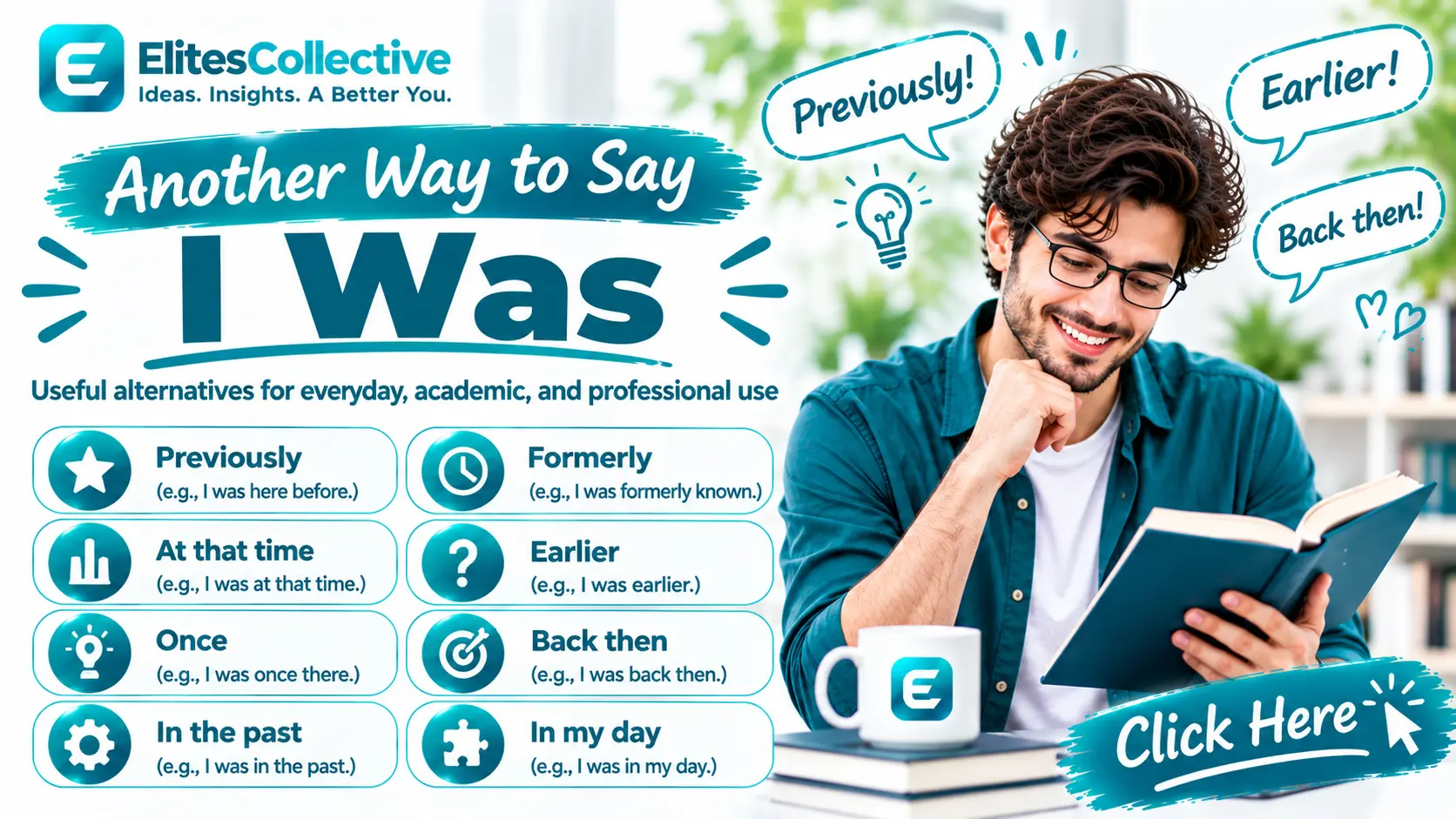
Looking for another way to say “I was”? There are many simple phrases that can make your writing sound fresh and natural. For example, you can use “I used to be,” “I felt,” or “I found myself” to express past feelings and events. Moreover, these phrases can help you avoid repeating the same words. Whether you write essays, emails, stories, or work documents, the right words can make a big difference. In this guide, you will find 25+ alternatives, their meanings, and easy examples.
What Is Another Way to Say I Was?
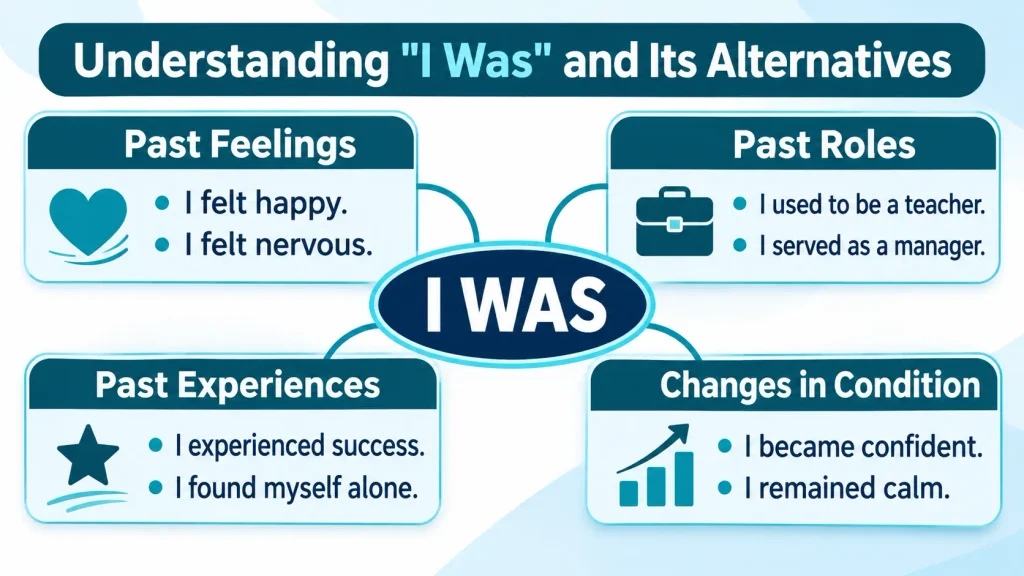
The phrase “I was” helps you talk about something in the past. You can use it to describe your feelings, actions, jobs, or life events. However, using it too many times can make your writing sound dull.
Instead, try other phrases that match your meaning. This way, your sentences will sound more natural and clear.
25+ Best Alternatives to I Was
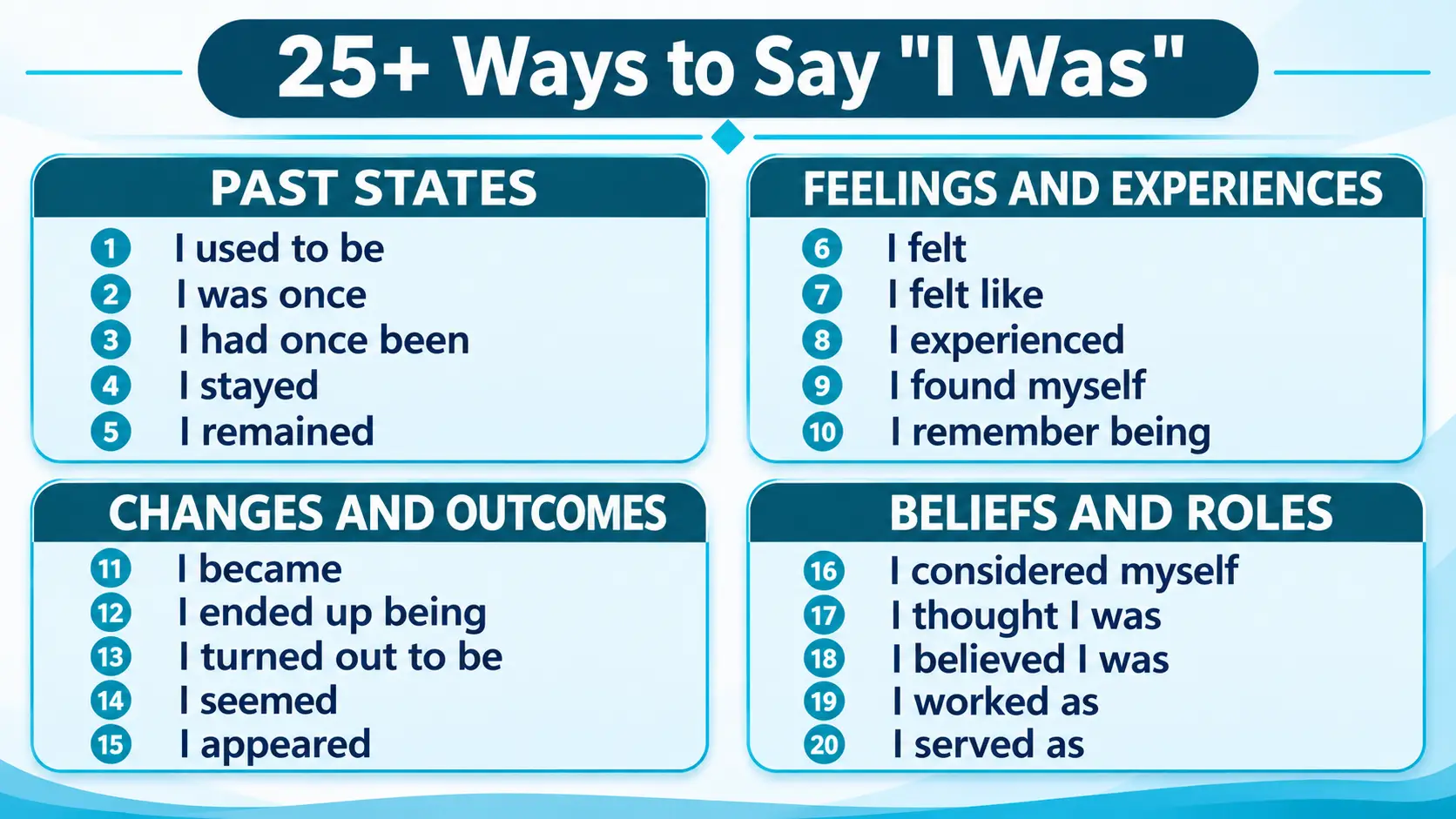
Here are 25 useful alternatives to “I was.” Each phrase includes a simple meaning and an example to help you understand how to use it.
| Alternative Phrase | Meaning | Example Sentence |
|---|---|---|
| I Used to Be | Describes a past state or role. | I used to be a teacher. |
| I Had Been | Talks about an earlier past event. | I had been busy all day. |
| I Found Myself | Describes being in a situation. | I found myself alone. |
| I Felt | Shows a past feeling. | I felt happy yesterday. |
| I Considered Myself | Explains how you saw yourself. | I considered myself lucky. |
| I Remained | Shows that something continued. | I remained calm. |
| I Became | Describes a change. | I became confident. |
| I Seemed | Shows how something looked. | I seemed nervous. |
| I Appeared | Describes how you looked to others. | I appeared confident. |
| I Experienced | Talks about something you went through. | I experienced great success. |
| I Was Once | Talks about a past role or state. | I was once a student. |
| I Lived | Describes where you lived. | I lived in London. |
| I Worked As | Talks about a past job. | I worked as a manager. |
| I Served As | Describes a past role. | I served as a team leader. |
| I Acted As | Talks about a role you performed. | I acted as a supervisor. |
| I Thought I Was | Shows a past belief. | I thought I was ready. |
| I Believed I Was | Talks about something you once believed. | I believed I was right. |
| I Remember Being | Talks about a past memory. | I remember being happy. |
| I Ended Up Being | Shows an unexpected result. | I ended up being correct. |
| I Turned Out to Be | Explains what you later discovered. | I turned out to be successful. |
| I Stayed | Shows that you continued in a state. | I stayed positive. |
| I Felt Like | Shows a past feeling or thought. | I felt like a winner. |
| I Identified As | Describes how you saw your identity. | I identified as a beginner. |
| I Had Once Been | Talks about an earlier state. | I had once been a student. |
| I Found That I Was | Shows something you discovered. | I found that I was wrong. |
Examples of Using Alternatives to I Was
You can use these phrases in many types of sentences. For example, look at these simple changes:
- Original: I was happy with the results.
- Alternative: I felt happy with the results.
- Original: I was a teacher.
- Alternative: I used to be a teacher.
- Original: I was responsible for the project.
- Alternative: I managed the project.
- Original: I was confused about the situation.
- Alternative: I found myself confused about the situation.
- Original: I was nervous before the interview.
- Alternative: I felt nervous before the interview.
As you can see, these small changes can make your writing more interesting.
Professional Ways to Say I Was

Professional writing needs clear and simple words. Therefore, you can use different phrases in business emails, resumes, reports, and job applications.
Here are some useful professional options:
- I previously worked as
- I served as
- I held the position of
- I managed
- I worked in the role of
- I had experience as
- I contributed as
- I oversaw
Formal Examples for Workplace Writing
You can make your work-related sentences sound more natural with a few changes.
- Instead of “I was the team leader,” write “I served as the team leader.”
- Instead of “I was responsible for marketing,” write “I managed marketing activities.”
- Instead of “I was involved in the project,” write “I contributed to the project.”
Additionally, these phrases work well in different situations.
When Should You Use Professional Alternatives?
You can use professional phrases when writing:
- Job applications and resumes
- Business emails
- Professional biographies
- Academic reports
- Workplace presentations
For example, these phrases help you describe your past work in a clear way.
Casual and Conversational Alternatives to I Was
Everyday conversations often sound better with simple words. So, instead of using “I was” in every sentence, try these natural phrases:
- I used to be
- I felt like
- I ended up being
- I found myself
- I was once
- I remember being
Everyday Conversation Examples
Here are some common examples that you can use in daily conversations:
- I was tired → I felt exhausted.
- I was excited → I couldn’t wait.
- I was surprised → I didn’t expect that.
- I was busy → I had a lot going on.
- I was alone → I found myself on my own.
Similarly, you can use these phrases in text messages and personal stories.
How to Choose the Right Alternative to I Was
Choosing the right phrase can make your writing easier to read. However, not every alternative works in every sentence. Therefore, think about your meaning before changing the words.
Consider the Meaning of Your Sentence
First, decide what you want to describe. Are you talking about a feeling, a job, a past event, or a personal situation? Once you know the meaning, choose a phrase that fits.
Match the Tone of Your Writing
Next, think about your readers. For example, use formal phrases in business documents and simple words in daily conversations. This will help your message sound natural.
Avoid Unnecessary Word Replacements
You do not need to change “I was” every time you use it. Sometimes, the original phrase is the best choice. Instead, use alternatives only when they make your sentence clearer or more interesting.
Frequently Asked Questions
What Is the Best Alternative to I Was?
The best choice depends on your sentence. For example, “I used to be,” “I felt,” “I found myself,” and “I had been” can work in different situations.
How Can I Avoid Repeating I Was in Writing?
Try using different verbs and sentence styles. For instance, instead of writing “I was tired,” you can write “I felt exhausted.” This makes your writing sound fresh.
Is I Used to Be the Same as I Was?
No, both phrases have slightly different meanings. “I used to be” talks about a past condition that is usually no longer true. On the other hand, “I was” simply talks about something in the past.
Can I Use I Had Been Instead of I Was?
Yes, but only when the sentence needs the past perfect tense. Use “I had been” when a situation happened before another past event.
What Is a More Professional Way to Say I Was?
You can use phrases such as “I previously worked as,” “I served as,” or “I held the position of.” These options work well when talking about your past work.
Should I Always Replace I Was?
No, you do not need to replace it in every sentence. “I was” is correct and sounds natural in many situations. However, other phrases can help you avoid repetition.
Conclusion
Finding another way to say “I was” can make your writing clear, natural, and interesting. There are many useful choices, including “I used to be,” “I felt,” “I remained,” and “I found myself.” Each phrase has a different meaning, so choose the one that fits your sentence. Finally, remember that simple and clear writing is always better than using difficult words just to sound professional.

Role: Author & Contributing Writer
Olivia Bennett is a dedicated Author at Elite’s Collective, focused on delivering clear, well-researched, and engaging articles tailored to the audience.