

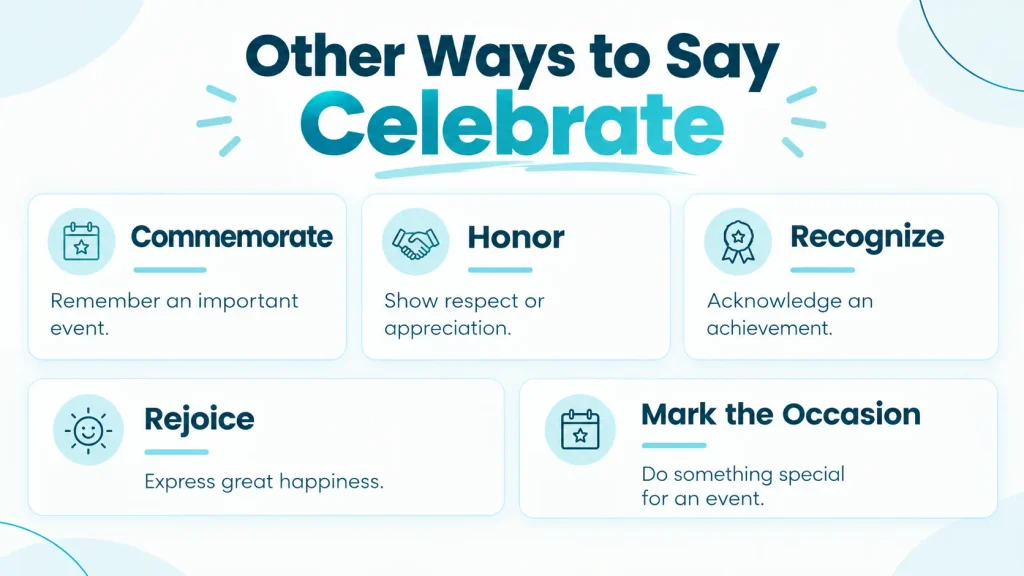
If you want another way to say celebrate, try commemorate, honor, mark, rejoice, toast, recognize, or make a big deal of. The best choice depends on the occasion. Some expressions describe a happy gathering, while others show respect, recognize an achievement, or remember an important event.
Key Takeaways
- Rejoice works when you want to express great happiness.
- Commemorate is best for remembering an important event or person.
- Honor and recognize emphasize respect or achievement.
- Toast is a natural choice for a special gathering or milestone.
- Mark the occasion works for birthdays, anniversaries, and other milestones.
- Make a big deal of is a casual expression for giving something special attention.
What Does Celebrate Mean?
To celebrate means to show happiness about an event, achievement, person, or special occasion. It can involve a party, a meal, a toast, a public event, or a simple expression of joy.
For example, you might celebrate a birthday with friends, celebrate a promotion with coworkers, or celebrate a team’s success after a big game.
The word also has a broader meaning. People can celebrate someone’s life, honor an important achievement, or commemorate a historical event without holding a party.
25 Other Ways to Say Celebrate
Here are natural alternatives to use in personal conversations, professional settings, social media posts, and formal writing.
1. Commemorate
Meaning: To remember and show respect for an important person, event, or historical occasion.
Example: The city will commemorate the anniversary of its founding with a public ceremony.
Best for: Historical events, memorials, anniversaries, and formal occasions.
Unlike celebrate, commemorate often focuses on remembrance rather than happiness.
2. Honor
Meaning: To show respect or admiration for someone or something.
Example: The school held a special event to honor its outstanding teachers.
Best for: Awards, achievements, important people, and formal ceremonies.
3. Recognize
Meaning: To acknowledge someone’s efforts, success, or importance.
Example: Our manager recognized the team for completing the project ahead of schedule.
Best for: Workplace achievements, academic success, and personal accomplishments.
Recognizing an achievement does not always involve a party or public celebration.
4. Rejoice
Meaning: To express great happiness about something positive.
Example: The whole family rejoiced when they heard the good news.
Best for: Happy news, major victories, and moments of relief.
This word is more expressive than simply saying you are happy.
5. Mark the Occasion
Meaning: To do something special to acknowledge an event or milestone.
Example: We went out for dinner to mark our tenth wedding anniversary.
Best for: Anniversaries, birthdays, milestones, and special events.
This is a versatile option when you want to describe a celebration without specifying exactly what happened.
6. Toast
Meaning: To express good wishes or honor someone or something, often by raising a glass.
Example: Everyone raised their glasses to toast the newlyweds.
Best for: Weddings, birthdays, promotions, and milestone gatherings.
A toast is usually one part of a celebration rather than the entire event.
7. Commemorate With a Ceremony
Meaning: To remember an important occasion through a formal event.
Example: The organization commemorated the opening of its new center with a ceremony.
Best for: Official events, anniversaries, and public occasions.
This phrase is more specific than celebrate and emphasizes a planned ceremony.
8. Pay Tribute To
Meaning: To express admiration, gratitude, or respect for someone.
Example: The concert paid tribute to the legendary musician.
Best for: Honoring influential people, artists, leaders, or loved ones.
Paying tribute is about respect and appreciation, not necessarily having a party.
9. Praise
Meaning: To express approval or admiration for someone’s actions or qualities.
Example: The coach praised the players for their hard work and determination.
Best for: Achievements, good behavior, and successful efforts.
Praise can be part of a celebration, but it does not mean the same thing as holding a celebration.
10. Applaud
Meaning: To show approval or admiration, literally by clapping or figuratively through words.
Example: We applaud the volunteers for their dedication to the community.
Best for: Public recognition, performances, and achievements.
In formal or professional writing, applaud often means strongly support or approve of an accomplishment.
11. Rejoice in
Meaning: To take great pleasure in something positive.
Example: The family rejoiced in their daughter’s success.
Best for: Personal victories, good news, and meaningful achievements.
Use this expression when the focus is on happiness rather than a gathering.
12. Enjoy
Meaning: To take pleasure in an event or experience.
Example: We enjoyed a lovely dinner to celebrate her graduation.
Best for: Casual conversations, parties, meals, and social events.
Enjoy describes the experience itself, so it works best when you want to emphasize having a good time.
13. Have a Party
Meaning: To gather with others for fun or to mark a special occasion.
Example: We’re having a party to celebrate my brother’s birthday.
Best for: Birthdays, graduations, promotions, and informal gatherings.
This is a direct, everyday expression when a celebration involves a party.
14. Throw a Party
Meaning: To organize or host a party.
Example: Her friends threw a surprise party to celebrate her new job.
Best for: Casual celebrations, surprise events, and social gatherings.
Use throw a party when you want to emphasize organizing the event.
15. Festively Mark
Meaning: To acknowledge an occasion in a joyful or celebratory way.
Example: The town festively marked the holiday with music and decorations.
Best for: Descriptive writing and public festivities.
This phrase is less common in everyday conversation than mark the occasion, so use it when the added emphasis on a festive atmosphere is useful.
16. Observe
Meaning: To recognize an occasion, tradition, or special day, often through established customs.
Example: Our family observes the holiday with a special meal each year.
Best for: Holidays, religious or cultural traditions, and anniversaries.
Observe is often more neutral or formal than celebrate. It does not always suggest a joyful party.
17. Commemorate a Milestone
Meaning: To mark an important stage or achievement.
Example: The company hosted a dinner to commemorate its twentieth year in business.
Best for: Business anniversaries, career achievements, and personal milestones.
This expression is useful when the event deserves special recognition.
18. Revel in
Meaning: To take great pleasure in an enjoyable experience or achievement.
Example: The players reveled in their victory after a difficult season.
Best for: Major wins, exciting news, and moments of success.
Revel in emphasizes enjoying the feeling of success. It is more expressive than celebrate and is not suitable for every formal context.
19. Make a Big Deal Of
Meaning: To give something special attention or treat it as particularly important.
Example: My parents made a big deal of my graduation and invited the whole family.
Best for: Casual conversations, personal milestones, and enthusiastic reactions.
This expression is informal. Depending on context, it can also suggest that someone is giving something more attention than necessary.
20. Cheer
Meaning: To express happiness, support, or excitement, often with shouts or applause.
Example: The fans cheered when their team won the championship.
Best for: Sports victories, performances, and exciting announcements.
Cheering can be part of a celebration, but it does not necessarily mean celebrating an entire event.
21. Congratulate
Meaning: To express pleasure or approval because someone has achieved something or experienced good fortune.
Example: I called my friend to congratulate her on her promotion.
Best for: Promotions, graduations, awards, weddings, and personal successes.
Congratulate focuses on what you say or do for another person. It is not a complete substitute for celebrate in every sentence.
22. Give Thanks For
Meaning: To express gratitude for something valuable or positive.
Example: We gathered as a family to give thanks for another wonderful year together.
Best for: Gratitude-focused gatherings, family occasions, and reflective moments.
This phrase is suitable when appreciation matters more than excitement or entertainment.
23. Pay Homage To
Meaning: To show deep respect for a person, tradition, or influence.
Example: The museum’s new exhibit pays homage to the artists who shaped the movement.
Best for: Cultural events, artistic tributes, historical writing, and formal occasions.
Pay homage to is more formal than honor and often emphasizes a person’s influence or lasting contribution.
24. Commemorate the Achievement
Meaning: To mark a meaningful accomplishment in a memorable way.
Example: The team gathered for lunch to commemorate the completion of the five-year project.
Best for: Major projects, career milestones, and organizational achievements.
This phrase gives the occasion a sense of importance, although recognize or celebrate may sound more natural in some everyday contexts.
25. Celebrate in Style
Meaning: To celebrate with extra excitement, special arrangements, or an impressive event.
Example: They celebrated in style with a weekend trip and a dinner at their favorite restaurant.
Best for: Milestone birthdays, weddings, anniversaries, and major personal victories.
This is a variation of the original expression rather than a true synonym. Use it when you want to emphasize the scale or special nature of the celebration.
Best Alternatives to Celebrate by Context
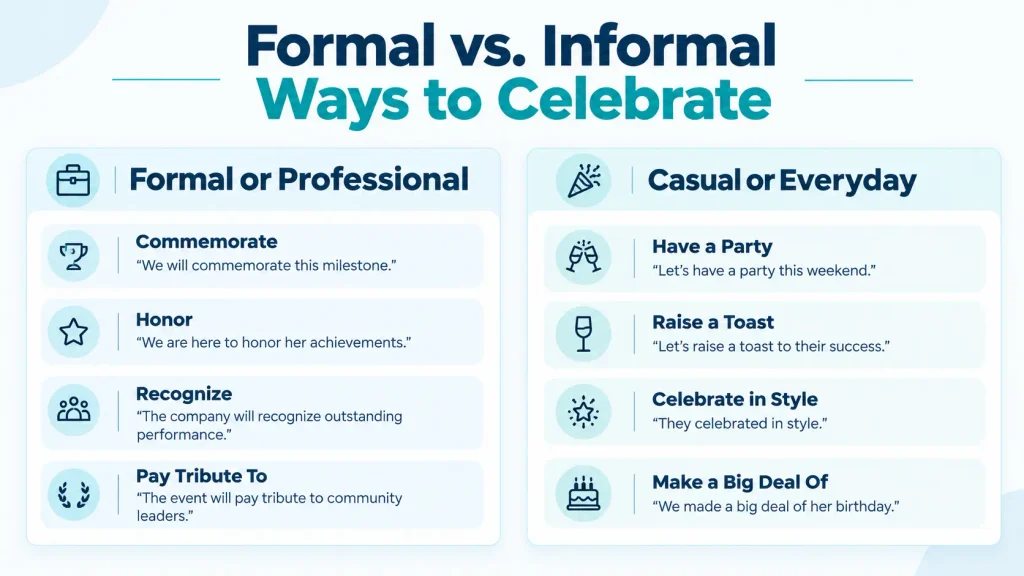
The right phrase depends on what you want to express and who will read or hear it.
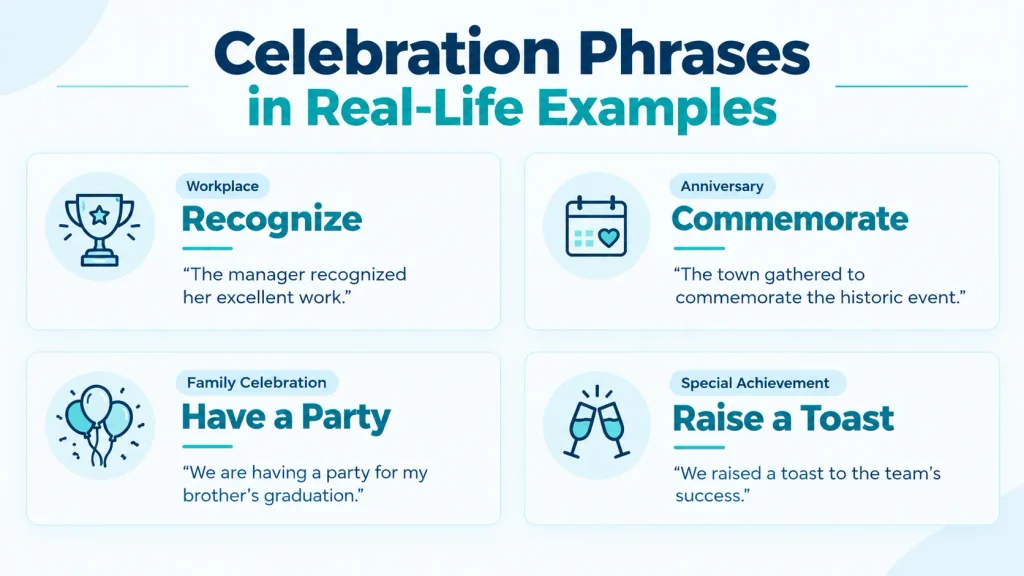
| Context | Best alternative | Example |
|---|---|---|
| Birthday or anniversary | Mark the occasion | We marked the occasion with dinner. |
| Workplace achievement | Recognize | The director recognized her contribution. |
| Major victory | Rejoice in | The team rejoiced in its success. |
| Historical event | Commemorate | The museum commemorated the historic event. |
| Wedding or special gathering | Toast | Let’s toast the happy couple. |
| Honoring a person | Pay tribute to | They paid tribute to their mentor. |
| Casual party | Throw a party | We’re throwing a party this weekend. |
| Graduation or promotion | Congratulate | I congratulated him on his promotion. |
| Holiday or tradition | Observe | We observe the holiday with family. |
| Personal achievement | Revel in | She reveled in her well-earned success. |
| Formal recognition | Honor | The organization honored its volunteers. |
| Expressing gratitude | Give thanks for | We gave thanks for another successful year. |
How to Choose the Right Word
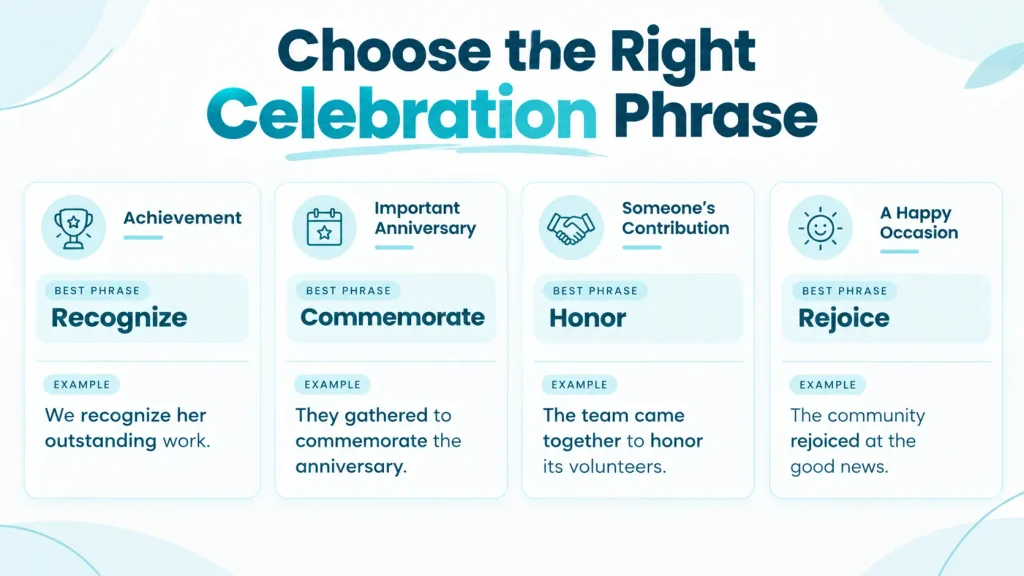
For professional communication
Use recognize, acknowledge, honor, or mark the occasion when discussing workplace achievements or company milestones.
Example: “We’d like to recognize the team for its outstanding performance this quarter.”
This sounds professional and focuses on the achievement without suggesting that a party is necessary.
For casual conversations
Choose have a party, throw a party, make a big deal of, or celebrate in style when talking about birthdays, promotions, and other happy events.
Example: “We’re throwing a party to celebrate her graduation.”
These phrases sound natural in everyday American English.
For formal ceremonies
Use commemorate, pay tribute to, honor, or observe when the occasion involves remembrance, respect, or tradition.
Example: “The ceremony will honor those who served the community.”
Choose commemorate when remembering an event is central to the occasion. Choose honor when showing respect for people is the main purpose.
For expressing happiness
Try rejoice, revel in, or cheer when you want to emphasize excitement or joy.
Example: “The entire office rejoiced when the company announced the good news.”
These expressions focus on emotional reactions rather than the event itself.
Celebrate vs. Commemorate vs. Honor
These three words are related, but they are not interchangeable in every situation.
| Word | Main purpose | Example |
|---|---|---|
| Celebrate | Express happiness about an occasion or achievement | We celebrated our team’s victory. |
| Commemorate | Remember an important event or person | The community commemorated the anniversary. |
| Honor | Show respect or admiration | The school honored its retiring principal. |
A single event can serve all three purposes. For example, a school may celebrate its anniversary, commemorate its history, and honor its founders.
Common Mistakes to Avoid
- Using commemorate for every happy occasion: Commemorate often emphasizes remembrance. For a birthday party, celebrate or mark the occasion is usually more natural.
- Treating congratulate and celebrate as identical: You congratulate a person on an achievement, but you celebrate the achievement or occasion.
- Using toast to describe an entire event: A toast is usually a short expression of good wishes within a larger gathering.
- Using rejoice in every professional message: Rejoice can sound overly emotional in routine workplace communication. Recognize or acknowledge may fit better.
- Using observe when you mean to attend a party: Observe a holiday usually means recognizing it or following its traditions, not simply watching an event.
Frequently Asked Questions
What is a more formal word for celebrate?
Commemorate, honor, recognize, and observe can be more formal alternatives, depending on the meaning. Use commemorate for remembrance, honor for respect, and recognize for achievements.
What is a professional way to say celebrate success?
You can say recognize the achievement, acknowledge the team’s success, honor the accomplishment, or mark the milestone. For example, “We’d like to recognize the team’s success on this project.”
What is another word for celebrate a birthday?
Natural options include mark the occasion, have a birthday party, throw a birthday party, and celebrate in style. You could also say, “We’re getting together to mark her birthday.”
What is another way to say celebrate an achievement?
Try recognize the accomplishment, honor the achievement, acknowledge the success, or rejoice in the victory. Choose based on whether you want to emphasize recognition, respect, or happiness.
What is a synonym for celebrate in a formal speech?
Commemorate, honor, recognize, and pay tribute to are useful options. The best choice depends on whether the speech focuses on remembering an event, praising a person, or acknowledging an accomplishment.
Can commemorate and celebrate be used interchangeably?
Sometimes, but not always. Celebrate usually emphasizes happiness or enjoyment, while commemorate emphasizes remembering an important event or person. A celebration can commemorate an occasion, but the words do not have exactly the same meaning.
What is a casual way to say celebrate?
You can say throw a party, have a get-together, make a big deal of it, or celebrate in style. For example, “Let’s get together this weekend and celebrate your new job.”
Final Thoughts
The best alternative to celebrate depends on the occasion and the message you want to convey. Use rejoice to express happiness, commemorate to remember an important event, honor to show respect, and recognize to acknowledge an achievement. For everyday situations, mark the occasion is a flexible and natural choice.
Choosing the right expression makes your writing more precise and helps you communicate the feeling behind the occasion.

Role: Author & Contributing Writer
Olivia Bennett is a dedicated Author at Elite’s Collective, focused on delivering clear, well-researched, and engaging articles tailored to the audience.