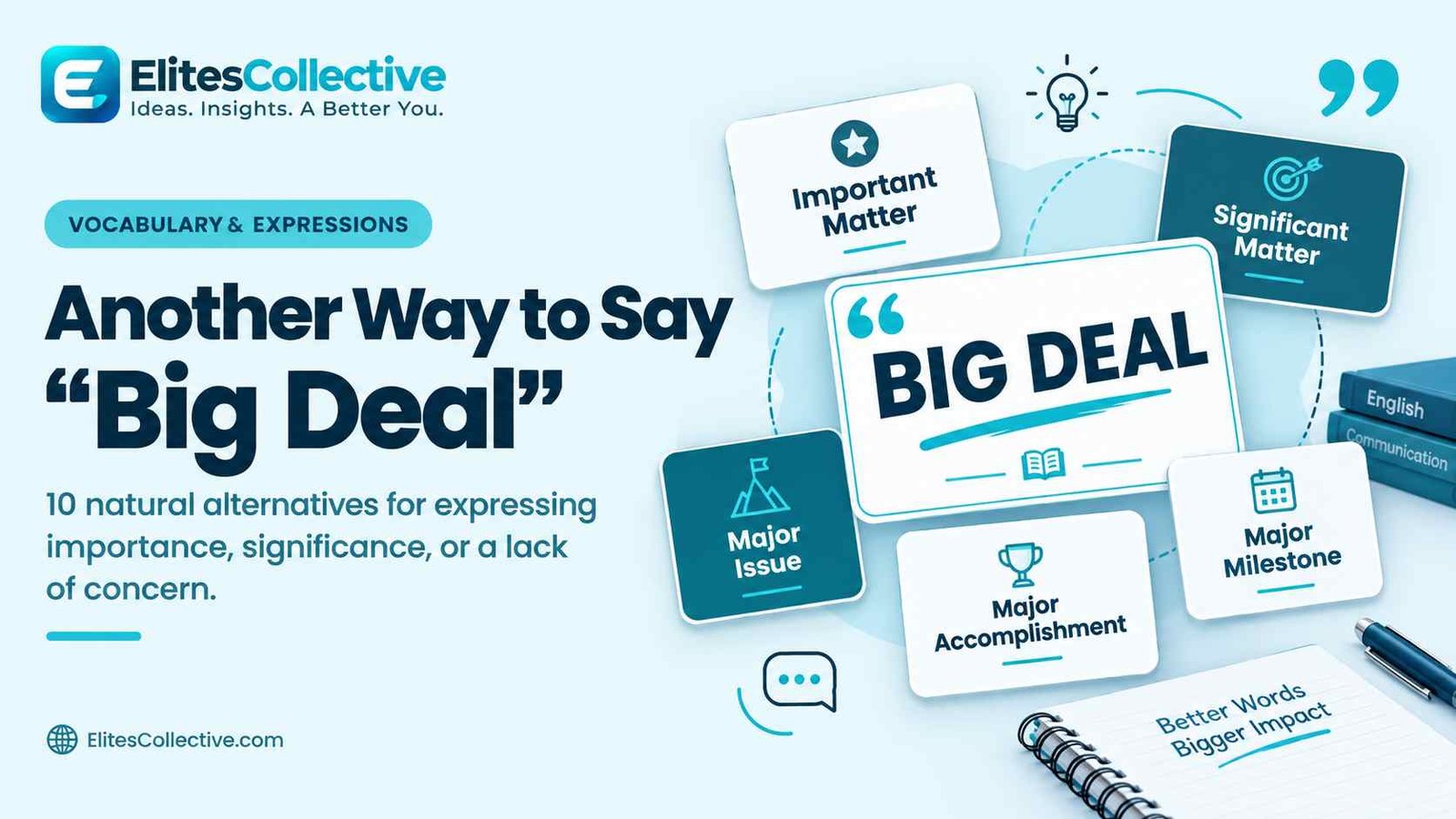
“Big deal” can mean something important, impressive, or significant, but it can also be used sarcastically to mean “that’s not important.” The best alternative depends on the intended meaning and tone. Natural options include major issue, important matter, significant event, big thing, major accomplishment, and no big deal in the opposite sense.
Key Takeaways
- “Big deal” can have either a positive/serious meaning or a sarcastic meaning.
- Use “important matter” or “significant issue” for more formal writing.
- Use “major accomplishment” when praising someone’s achievement.
- “Big thing” works well in casual conversation.
- If you mean something is unimportant, “no big deal” is the natural expression.
- The right replacement depends heavily on context.
What Does “Big Deal” Mean?
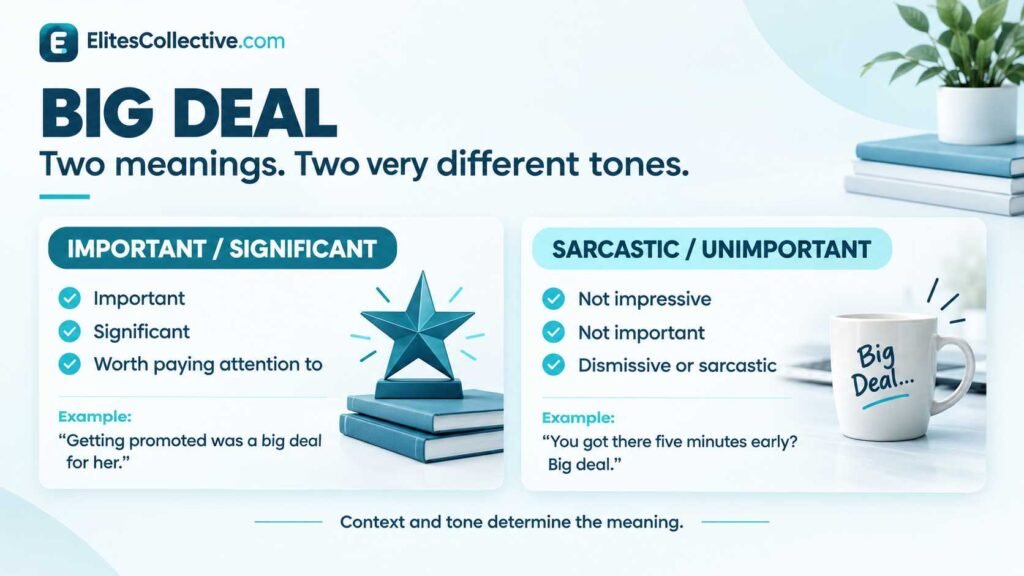
“Big deal” is an informal expression with more than one common meaning.
It can describe something important, significant, impressive, or worth paying attention to:
Getting promoted was a big deal for her.
It can also be used sarcastically to suggest that something isn’t important or impressive:
You got there five minutes early? Big deal.
Because of this contrast, there isn’t one perfect replacement for every use of “big deal.” You need to consider what you actually mean.
Another Way to Say “Big Deal”
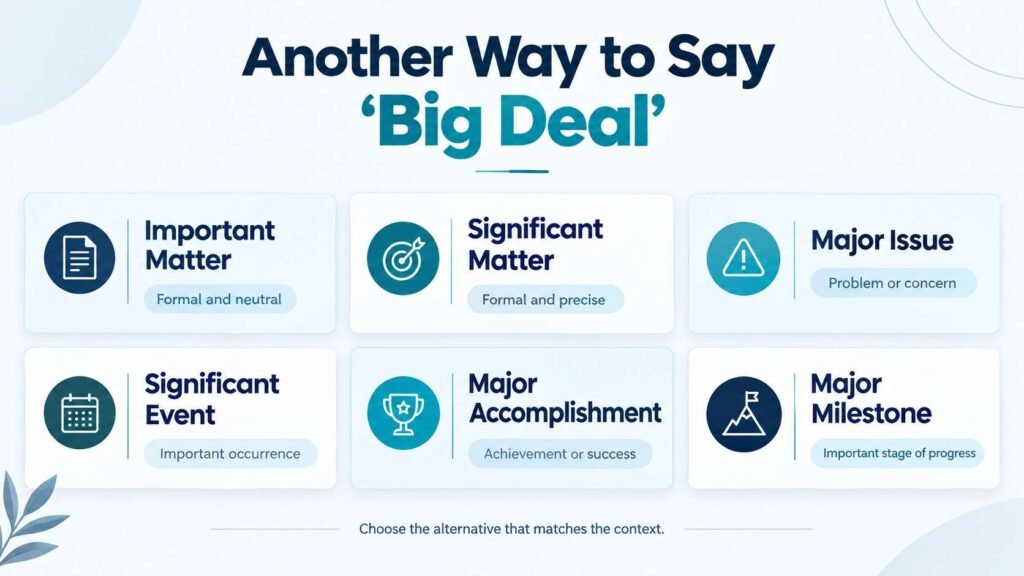
1. Important Matter
“Important matter” is a neutral and more formal alternative when referring to something that deserves attention.
Example:
The board considered the merger an important matter.
Best for: Formal, professional, and serious contexts.
2. Significant Matter
“Significant matter” emphasizes that something has considerable importance or consequences.
Example:
The decision is a significant matter for the entire organization.
Best for: Professional, academic, and formal writing.
3. Major Issue
Use “major issue” when “big deal” refers to a serious problem, concern, or matter.
Example:
The delay became a major issue for the project.
Best for: Workplace, news, and serious discussions.
4. Significant Event
When “big deal” describes an important occasion or occurrence, “significant event” is a clear alternative.
Example:
Graduating from college was a significant event in her life.
Best for: Formal writing and personal milestones.
5. Major Accomplishment
If you’re talking about someone’s achievement, “major accomplishment” is more precise than “big deal.”
Example:
Publishing her first book was a major accomplishment.
Best for: Achievements, career milestones, and personal success.
6. Big Thing
“Big thing” is a casual alternative that works when something is considered important, popular, or noteworthy.
Example:
Starting your own business is a big thing.
Best for: Everyday conversation.
7. Major Milestone
Use “major milestone” for an important stage or achievement in someone’s life, career, or project.
Example:
Completing the first phase was a major milestone for the team.
Best for: Professional and personal achievements.
8. Serious Matter
“Serious matter” emphasizes importance, concern, or potential consequences.
Example:
This isn’t something we can ignore; it’s a serious matter.
Best for: Serious conversations and formal situations.
9. Important Occasion
When “big deal” refers to an important celebration or event, “important occasion” can work well.
Example:
Her wedding was an important occasion for the entire family.
Best for: Celebrations and significant personal events.
10. Major Development
“Major development” is useful when something represents an important change or new event.
Example:
The agreement marks a major development in the negotiations.
Best for: News, business, politics, and professional writing.
If You Mean “Big Deal” Sarcastically
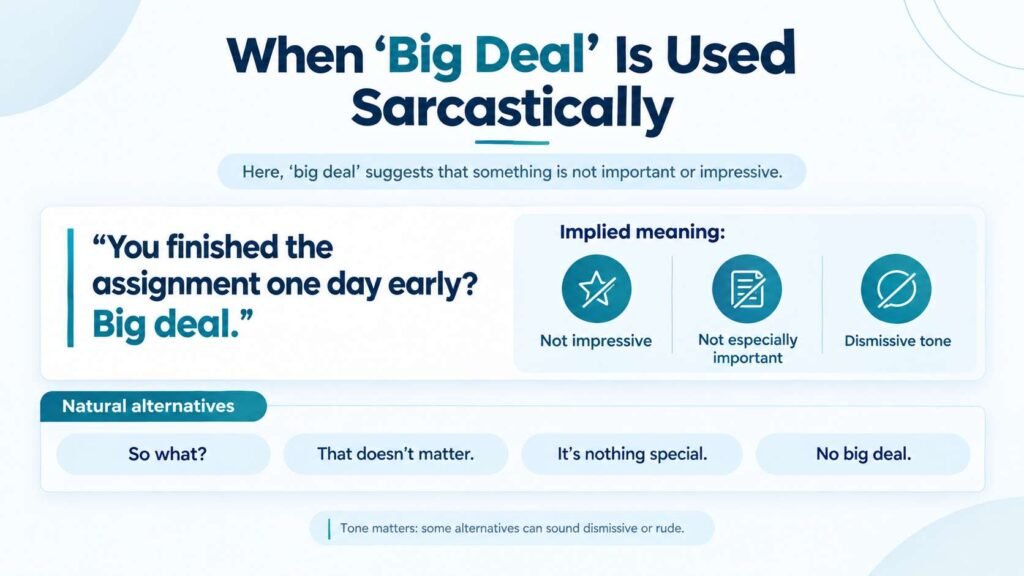
Sometimes “big deal” means the opposite of important. A person may say it sarcastically to mean “that isn’t impressive” or “that doesn’t matter much.”
For example:
You finished the assignment one day early? Big deal.
Natural alternatives include:
- So what?
- Who cares?
- That doesn’t matter.
- It’s not important.
- It’s nothing special.
- No big deal.
Be careful with these expressions because some can sound dismissive or rude.
“Big Deal” Alternatives by Context
| Alternative | Tone | Best Context |
| Important matter | Formal | Professional or serious writing |
| Significant matter | Formal | Academic or professional |
| Major issue | Neutral | Problems and concerns |
| Significant event | Formal | Important events |
| Major accomplishment | Positive | Achievements |
| Big thing | Casual | Everyday conversation |
| Major milestone | Neutral | Progress and achievements |
| Serious matter | Serious | Important concerns |
| Important occasion | Formal | Celebrations and events |
| Major development | Professional | Business, news, and changes |
How to Choose the Right Alternative
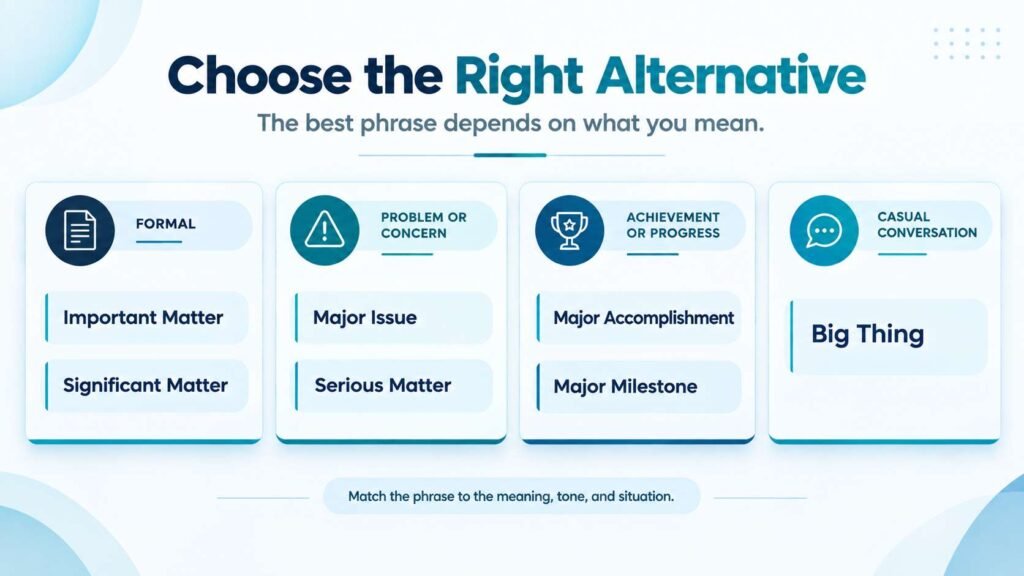
The best replacement depends on what makes something a “big deal.”
If you’re talking about importance, use:
important matter or significant matter
If you’re describing a problem, use:
major issue
If you’re praising an achievement, use:
major accomplishment
If you’re describing an important stage of progress, use:
major milestone
For casual conversation, “big thing” may sound more natural.
For formal writing, avoid relying on “big deal” unless the conversational tone is intentional. Words such as significant, major, important, and substantial can communicate the idea more precisely.
Common Mistakes
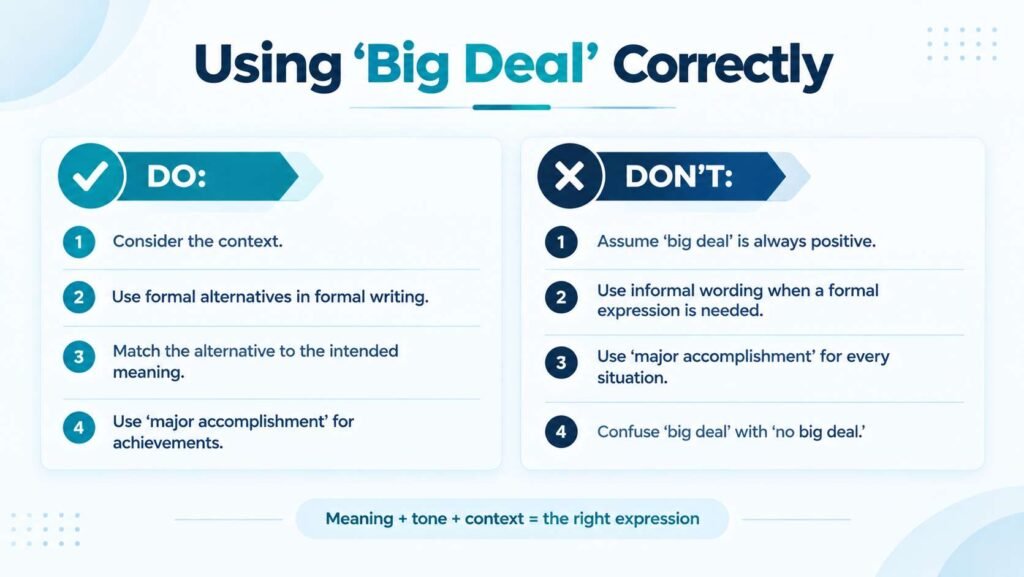
Using “big deal” in formal writing
“Big deal” is generally informal. In a formal report, “significant matter” or “major issue” may be more appropriate.
Treating “big deal” as always positive
The expression can be sarcastic:
Big deal. Anyone could have done that.
The meaning depends on context and tone.
Using “major accomplishment” for every situation
A major accomplishment refers specifically to an achievement. It doesn’t work when “big deal” means an important problem or event.
Confusing “big deal” with “no big deal”
These expressions can communicate opposite ideas.
That was a big deal. = That was important.
It’s no big deal. = It’s not important or not a problem.
Frequently Asked Questions
What is a formal way to say “big deal”?
Depending on the context, formal alternatives include “significant matter,” “important matter,” “major issue,” and “significant event.” The best choice depends on whether you’re discussing a problem, event, decision, or achievement.
What is a casual way to say “big deal”?
“Big thing” is a natural casual alternative when you mean that something is important or noteworthy.
What is another way to say “it’s a big deal”?
You can say “it’s very important,” “it’s significant,” “it’s a major milestone,” or “it’s a major accomplishment,” depending on what you’re describing.
What does “big deal” mean sarcastically?
When used sarcastically, “big deal” means that something is not particularly important or impressive. For example, “You got an extra five minutes? Big deal.”
Is “big deal” formal or informal?
“Big deal” is generally informal and is most common in everyday conversation. More formal alternatives are usually better for academic or professional writing.
What is the opposite of “big deal”?
If you mean something isn’t important, natural expressions include “no big deal,” “not important,” “nothing serious,” or “nothing special.”
Conclusion
There are several natural ways to replace “big deal,” but the best choice depends on its meaning. Use “significant matter” or “important matter” for formal contexts, “major accomplishment” for achievements, “major milestone” for important progress, and “big thing” in casual conversation. If “big deal” is being used sarcastically, phrases such as “no big deal” or “nothing special” may better express the intended meaning.

Role: English Language & Communication Writer
Daniel Carter is an English language writer specializing in workplace communication, professional vocabulary, resumes, emails, and career-focused English.