
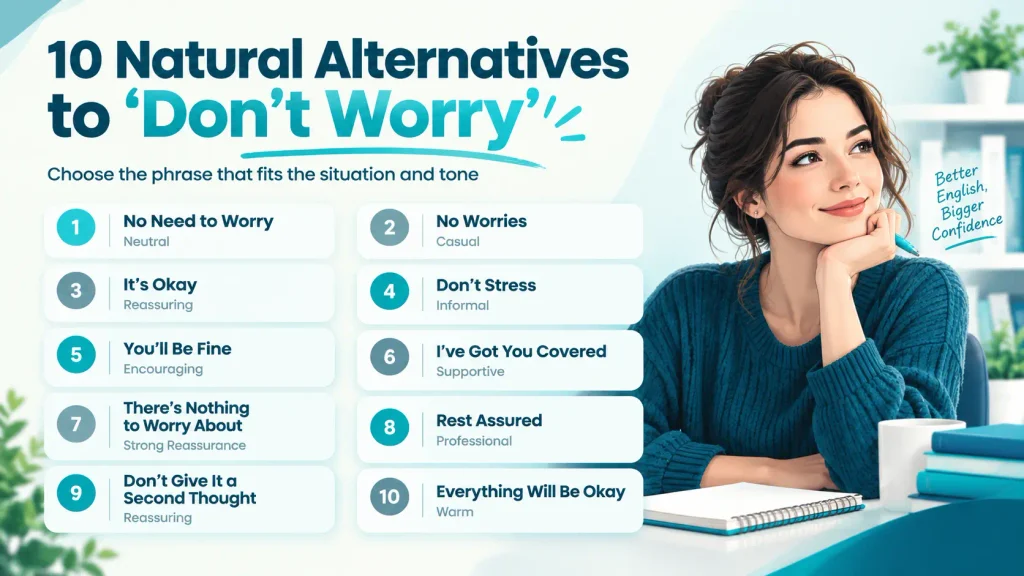
If you want another way to say “don’t worry,” the best choice depends on the situation and tone. Natural alternatives include “no need to worry,” “no worries,” “it’s okay,” “you’ll be fine,” “don’t stress,” “I’ve got you covered,” “there’s nothing to worry about,” “rest assured,” “don’t give it a second thought,” and “everything will be okay.” Some are casual, while others work better in professional or reassuring situations.
Key Takeaways
- “No need to worry” is a close, neutral alternative to “don’t worry.”
- “No worries” is casual and common in everyday conversation.
- “Rest assured” sounds more formal and works well in professional writing.
- “Don’t stress” is friendly and informal.
- “I’ve got you covered” reassures someone by offering support or taking responsibility.
- The best alternative depends on whether you’re comforting someone, responding to an apology, or reassuring them about a problem.
What Does “Don’t Worry” Mean?
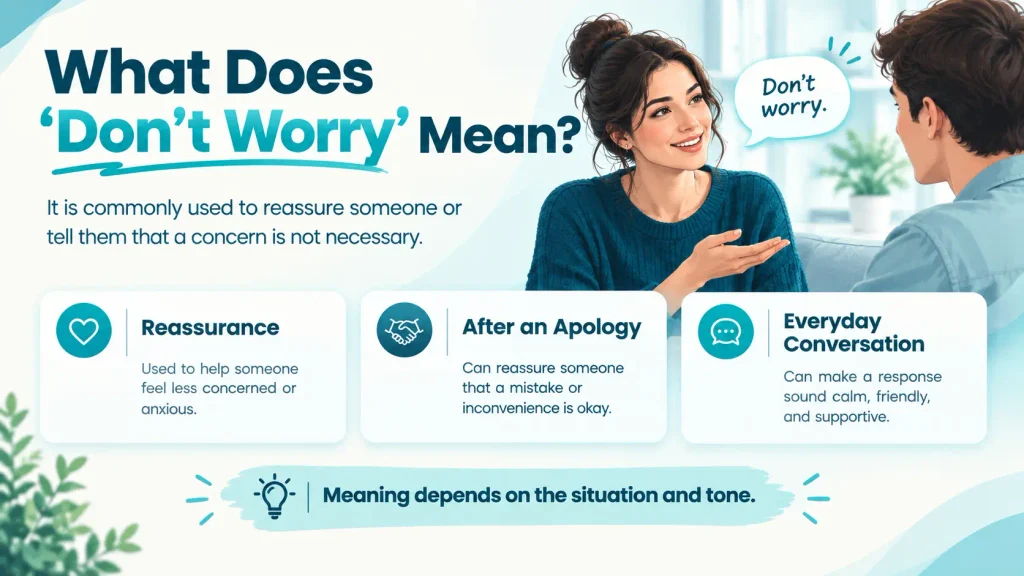
“Don’t worry” is a common expression used to reassure someone, tell them not to be anxious, or show that a problem is not as serious as they think.
For example:
“Don’t worry. I’ll take care of everything.”
The phrase can also be used when someone apologizes or feels bad about a mistake:
“I’m sorry I forgot to call you.”
“Don’t worry about it.”
The expression is flexible, but repeating it too often can make your writing or conversation sound predictable. Choosing a more specific phrase can help you match the tone to the situation.
10 Other Ways to Say “Don’t Worry”
1. No Need to Worry
“No need to worry” is one of the closest alternatives to “don’t worry.” It tells someone that their concern is unnecessary.
Best for: Everyday, polite, and neutral situations
Example:
“No need to worry about the deadline. We still have two days.”
This phrase is especially useful when you want to reassure someone without sounding overly casual.
2. No Worries
“No worries” is a relaxed, conversational expression. It can reassure someone that something isn’t a problem, especially after an apology or request.
Best for: Casual conversation, texting, and friendly communication
Example:
“Sorry I’m a few minutes late.”
“No worries. We haven’t started yet.”
Unlike “don’t worry,” “no worries” can also mean that you aren’t bothered by something. Oxford identifies “not to worry” as an informal expression meaning that something is not important or does not matter.
3. It’s Okay
“It’s okay” is a simple way to reassure someone that a mistake, problem, or uncomfortable situation isn’t serious.
Best for: Apologies, mistakes, and emotional reassurance
Example:
“I’m sorry I sent you the wrong file.”
“It’s okay. Just send the correct one when you can.”
This is often more appropriate than “don’t worry” when someone feels guilty about something.
4. Don’t Stress
“Don’t stress” is a casual way to tell someone not to become anxious about a situation.
Best for: Friends, family, casual conversation, and texting
Example:
“Don’t stress about the presentation. You’ve prepared well.”
It has a more informal tone than “no need to worry,” so it may not be the best choice for a formal email.
5. You’ll Be Fine
“You’ll be fine” focuses on the person’s ability to get through a difficult or uncertain situation.
Best for: Emotional support and encouragement
Example:
“You’re nervous about your interview, but you’ll be fine.”
The phrase is reassuring, but it can sound dismissive if someone is dealing with a serious problem. Use it when you know encouragement is appropriate.
6. I’ve Got You Covered
“I’ve got you covered” reassures someone that you will handle something or provide the help they need.
Best for: Friendly, supportive, and practical situations
Example:
“Don’t worry about bringing extra copies. I’ve got you covered.”
This isn’t a direct synonym for “don’t worry.” Instead, it provides reassurance by offering support or taking responsibility.
7. There’s Nothing to Worry About
“There’s nothing to worry about” gives a stronger form of reassurance. It directly tells someone that the situation does not present a reason for concern.
Best for: Clear reassurance and situations involving uncertainty
Example:
“The doctor said there’s nothing to worry about.”
Use this phrase carefully when the facts are uncertain. It can sound too confident if you don’t actually know whether everything is okay.
8. Rest Assured
“Rest assured” is a more formal way to reassure someone that something will be handled or that a particular outcome can be trusted.
Best for: Professional communication, formal writing, and customer communication
Example:
“Rest assured, your information will be handled carefully.”
This phrase is more formal than “don’t worry,” so it may sound unnatural in a casual text to a close friend.
9. Don’t Give It a Second Thought
“Don’t give it a second thought” tells someone not to continue thinking about or worrying about something.
Best for: Small mistakes, apologies, and minor concerns
Example:
“You accidentally deleted the message? Don’t give it a second thought. I already saved a copy.”
This expression is particularly useful when you want someone to stop feeling guilty or embarrassed about something minor.
10. Everything Will Be Okay
“Everything will be okay” offers emotional reassurance and expresses confidence that a difficult situation will work out.
Best for: Emotional support and difficult situations
Example:
“I know this week has been stressful, but everything will be okay.”
It sounds warmer and more personal than a simple “don’t worry.”
Which Alternative Should You Use?
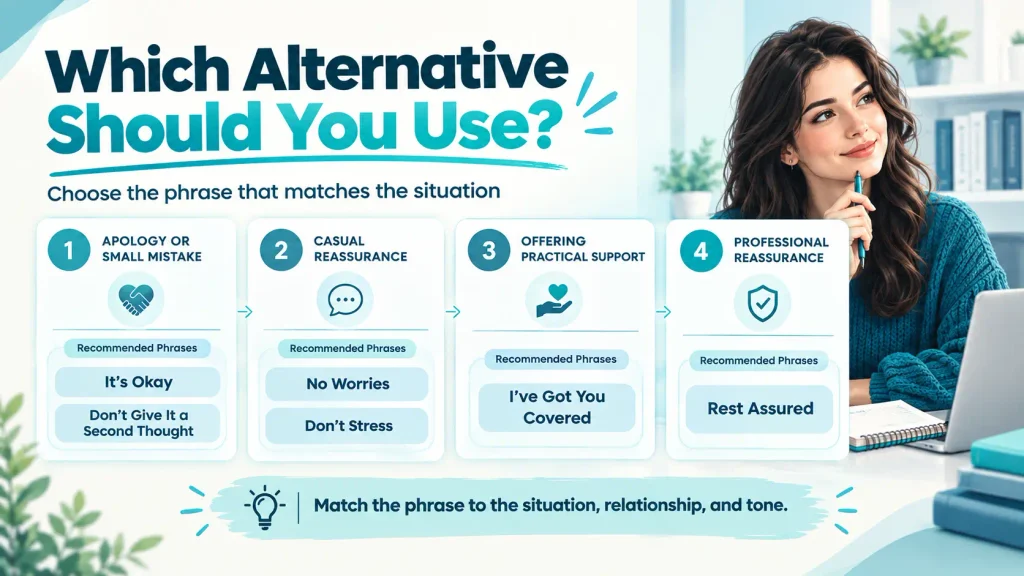
The right phrase depends on what you are trying to communicate.
| Alternative | Tone | Best Context |
| No need to worry | Neutral | General reassurance |
| No worries | Casual | Conversation and texting |
| It’s okay | Warm, neutral | Apologies and mistakes |
| Don’t stress | Casual | Friends and informal situations |
| You’ll be fine | Encouraging | Emotional support |
| I’ve got you covered | Friendly | Offering practical help |
| There’s nothing to worry about | Reassuring | Specific concerns |
| Rest assured | Formal | Professional communication |
| Don’t give it a second thought | Reassuring | Minor mistakes or concerns |
| Everything will be okay | Warm | Emotional reassurance |
Other Ways to Say “Don’t Worry” in Different Situations
When Someone Is Apologizing
If someone feels bad about a mistake, these options usually sound natural:
- It’s okay.
- No worries.
- Don’t worry about it.
- Don’t give it a second thought.
- It’s not a problem.
For example:
“I’m sorry I missed your call.”
“No worries. I’ll call you back later.”
Here, “no worries” or “it’s okay” works better than a phrase such as “you’ll be fine” because the person is apologizing rather than expressing anxiety.
When Someone Is Nervous
If someone is anxious about an upcoming event, try:
- Don’t stress.
- You’ll be fine.
- Everything will be okay.
- There’s nothing to worry about.
- You’ve got this.
For example:
“I’m really nervous about my interview.”
“You’ve got this. You’ve prepared for it.”
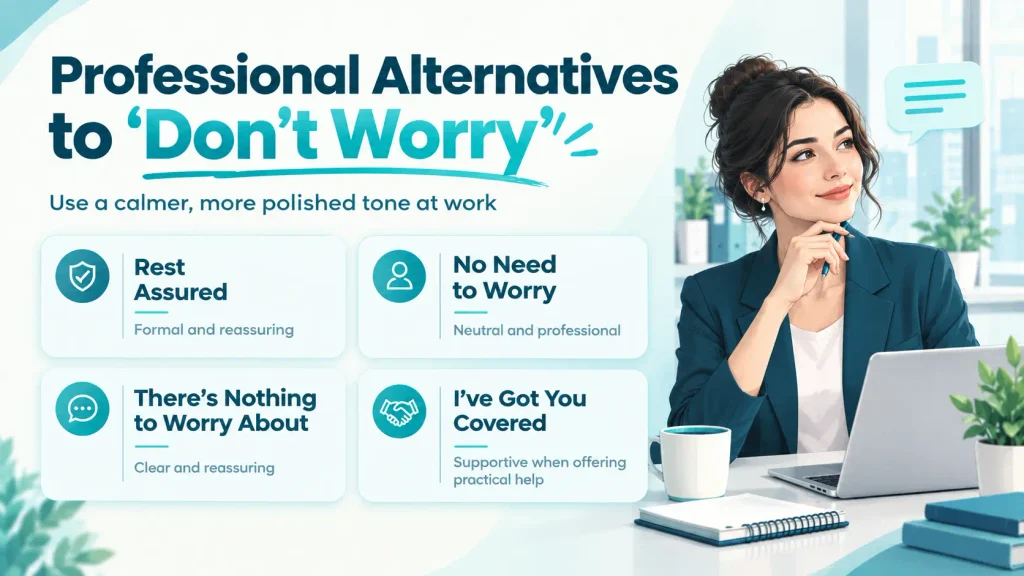
In a Professional Email
Professional communication usually calls for a calm and reassuring tone. Good choices include:
- No need to worry.
- Rest assured.
- There’s no cause for concern.
- Everything is under control.
- We’ll take care of it.
For example:
“Rest assured, we’re reviewing the issue and will provide an update shortly.”
This sounds more professional than:
“Don’t worry, we’ve got this.”
When You Are Offering Help
If you want to reassure someone by taking responsibility, use:
- I’ve got you covered.
- I’ll take care of it.
- Leave it with me.
- We’ll handle it.
- I’ve got this.
For example:
“Do I need to bring the printed documents?”
“No, I’ve got you covered.”
“Don’t Worry” vs. “No Worries”
These expressions are similar, but they don’t always serve exactly the same purpose.
“Don’t worry” directly tells someone not to be concerned:
“Don’t worry. I’ll be there on time.”
“No worries” is more conversational and often means that something isn’t a problem:
“Sorry, I forgot to attach the file.”
“No worries. Just send it when you get a chance.”
Both are natural, but “no worries” is generally more casual.
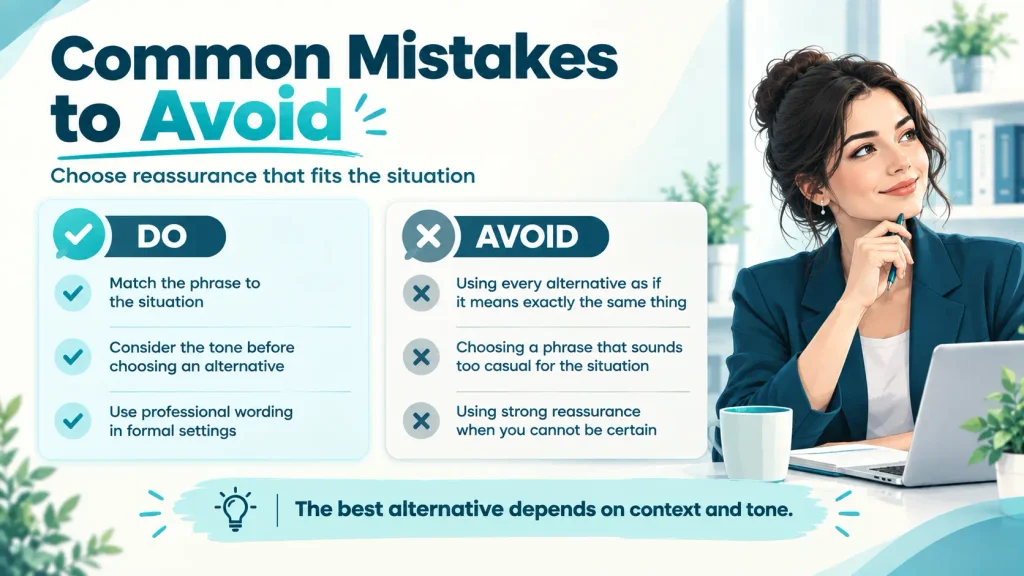
Common Mistakes to Avoid
Using “Calm Down” With Someone Who Is Upset
“Calm down” can sometimes be interpreted as dismissive or commanding. If someone is genuinely distressed, a gentler phrase such as “I’m here for you” or “Everything will be okay” may be more supportive.
Using “Rest Assured” in Casual Texts
“Rest assured” is grammatically correct, but it can sound overly formal in a message to a close friend.
Instead of:
“Rest assured, your pizza will arrive soon.”
A natural casual version would be:
“Don’t worry. Your pizza will be here soon.”
Treating Every Alternative as an Exact Synonym
Not every phrase above means exactly the same thing as “don’t worry.”
For example, “I’ve got you covered” emphasizes help, while “it’s okay” often responds to a mistake or apology. “You’ll be fine” provides encouragement rather than simply telling someone not to worry.
Choosing the phrase based on context makes your English sound more natural.
Frequently Asked Questions
What is a polite way to say “don’t worry”?
“No need to worry” is a polite, neutral alternative. In professional situations, “rest assured” or “there’s no cause for concern” can also work depending on the context.
What is a casual way to say “don’t worry”?
You can say “no worries,” “don’t stress,” “you’re good,” or “I’ve got you covered.” The best choice depends on what you’re reassuring the person about.
What is a professional way to say “don’t worry”?
“Rest assured” is a common formal alternative. You can also say “there’s no cause for concern” or “we’ll take care of it.”
Is “no worries” the same as “don’t worry”?
They can both reassure someone, but they aren’t always interchangeable. “Don’t worry” focuses on reducing someone’s concern, while “no worries” often means that something is not a problem or that you aren’t bothered by it.
What can I say instead of “don’t worry about it”?
Depending on the situation, try “it’s okay,” “no worries,” “never mind,” “it’s not a problem,” or “don’t give it a second thought.” “Never mind” can mean that something isn’t important or that someone doesn’t need to concern themselves with it.
How do you reassure someone without saying “don’t worry”?
Try “I’m here for you,” “you’ve got this,” “I’ll take care of it,” “everything will be okay,” or “we’ll figure it out.” These phrases reassure someone without directly telling them how they should feel.
What is a softer alternative to “don’t worry”?
“No need to worry” is a gentle choice. “I’m here for you” can be even more supportive when someone is emotionally upset.
Final Thoughts
There are many natural ways to replace “don’t worry,” but the best choice depends on the situation. Use “no worries” for casual conversation, “it’s okay” after a minor mistake, “don’t stress” with friends, and “rest assured” in more formal communication.
The key is not simply finding a synonym. Choose a phrase that matches the person’s feelings, the situation, and the level of formality you need.

Role: Lead Author & Content Specialist
James Mitchell is an experienced Lead Author at Elite’s Collective. He specializes in creating high-impact editorial content and driving core written projects designed to inform and engage readers.