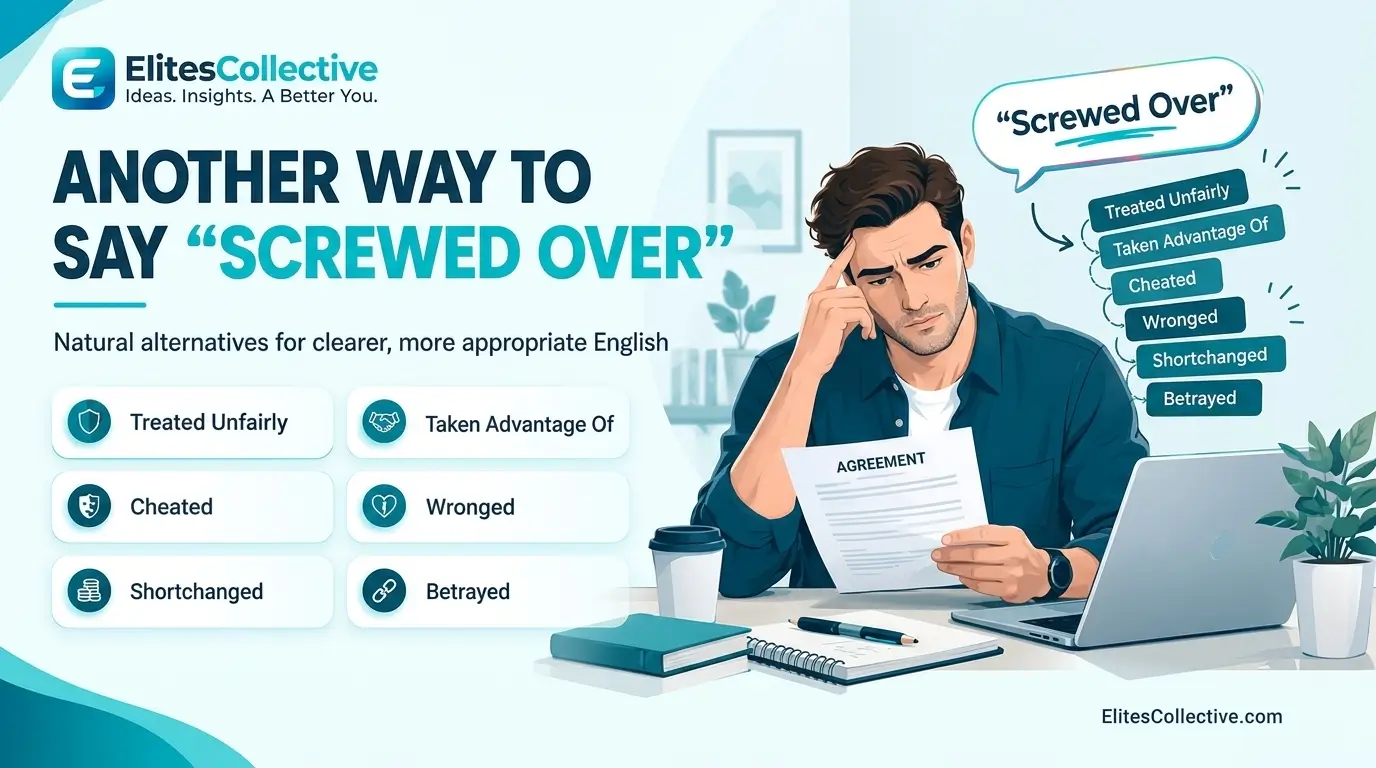
If you need another way to say “screwed over,” you can use phrases such as treated unfairly, taken advantage of, cheated, wronged, or shortchanged. The best choice depends on what happened and how strong you want your words to sound.
“Screwed over” is informal. It is common in casual American English, but it is usually not the best choice for professional writing.
Key Takeaways
- “Screwed over” means treated unfairly or put at a disadvantage.
- “Treated unfairly” is the safest neutral alternative.
- “Taken advantage of” suggests that someone exploited you.
- “Cheated” can suggest dishonest or unfair behavior.
- “Shortchanged” works well for money, pay, or credit.
- “Betrayed” is best when trust has been broken.
- Use more neutral wording in professional situations.
What Does “Screwed Over” Mean?
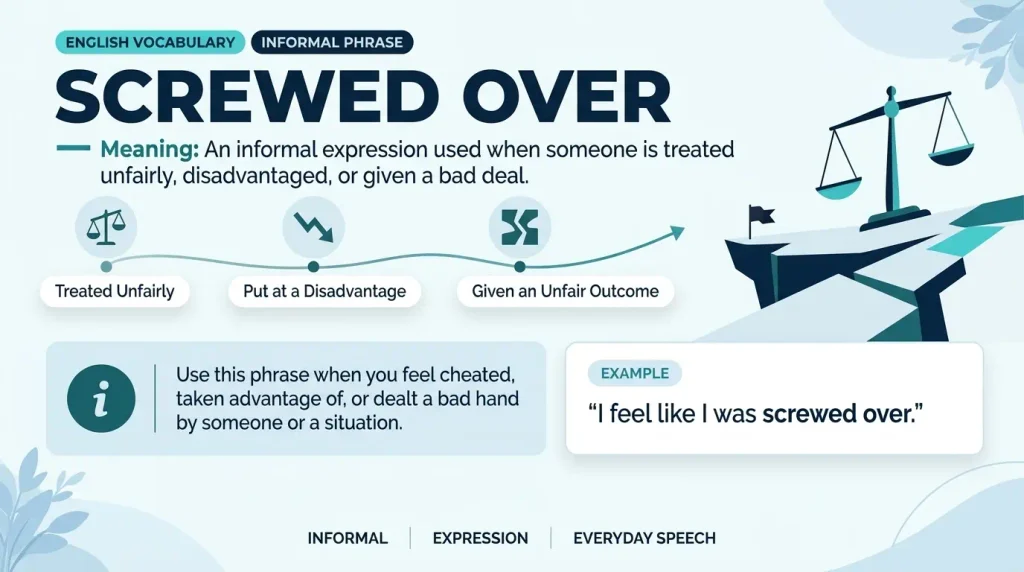
“Screwed over” is an informal phrase. It means that someone treated you unfairly, cheated you, or put you in a bad situation.
For example:
“I feel like my old employer screwed me over.”
The speaker may mean that the employer broke a promise, refused to pay what was agreed, or treated them unfairly.
The phrase can describe many situations. That is why the best replacement depends on the details.
For example, “cheated” may work when money is involved. “Betrayed” may be better when someone breaks your trust.
10 Natural Alternatives to “Screwed Over”
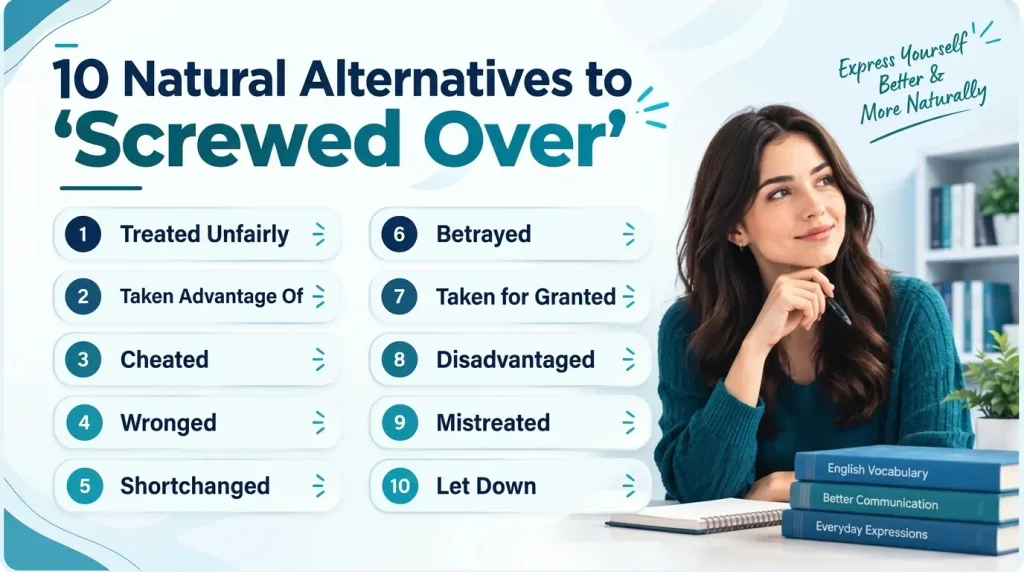
1. Treated Unfairly
“Treated unfairly” is the most neutral choice.
It means someone did not treat you in a fair or reasonable way. You can use it in both casual and professional situations.
Example:
“I felt that I was treated unfairly during the hiring process.”
This is a good choice when you want to explain the problem without sounding angry.
2. Taken Advantage Of
Use “taken advantage of” when someone uses you or your situation for their own benefit.
It can involve your time, money, trust, effort, or kindness.
Example:
“I realized that my business partner had been taking advantage of my trust.”
This phrase is stronger than “treated unfairly” because it suggests that someone used you.
3. Cheated
“Cheated” suggests unfair or dishonest behavior.
It works well when someone takes money, breaks an agreement, or gives you less than you were promised.
Example:
“I believe I was cheated out of the money I was owed.”
Use this word carefully. It can suggest that the other person acted on purpose.
4. Wronged
“Wronged” means that someone treated you unjustly.
It has a more serious tone than “screwed over.”
Example:
“She felt deeply wronged by the decision.”
This word works well when the situation caused strong feelings or serious harm.
5. Shortchanged
Use “shortchanged” when someone gives you less than you deserve or were promised.
It often works well for money, pay, credit, or opportunities.
Example:
“I felt shortchanged when I learned that other employees received larger bonuses.”
This is a useful choice when the main issue is getting less than you should have received.
6. Betrayed
“Betrayed” means that someone broke your trust.
It is common in relationships, friendships, family situations, and work relationships.
Example:
“I felt betrayed when my coworker took credit for my work.”
This is not a general synonym for every unfair situation. Use it when trust or loyalty is part of the problem.
7. Taken for Granted
Use “taken for granted” when someone does not value or appreciate your efforts.
It is often used in relationships, friendships, and workplaces.
Example:
“I felt like my extra work was being taken for granted.”
This is a softer phrase. It does not always mean that someone meant to hurt you.
8. Disadvantaged
“Disadvantaged” means that someone was put in a less favorable position.
It has a formal and neutral tone.
Example:
“The new policy may have disadvantaged some employees.”
This word works well in professional, academic, and formal writing.
9. Mistreated
“Mistreated” means that someone treated you badly or unfairly.
It can describe problems at work, in relationships, or with a company.
Example:
“He believed that he had been mistreated by his former employer.”
This word is useful when the problem involves poor treatment rather than money alone.
10. Let Down
“Let down” means that someone disappointed you.
It is much softer than “screwed over.”
Example:
“I felt really let down when they canceled at the last minute.”
Use this phrase when disappointment is the main feeling.
Which Alternative Should You Use?
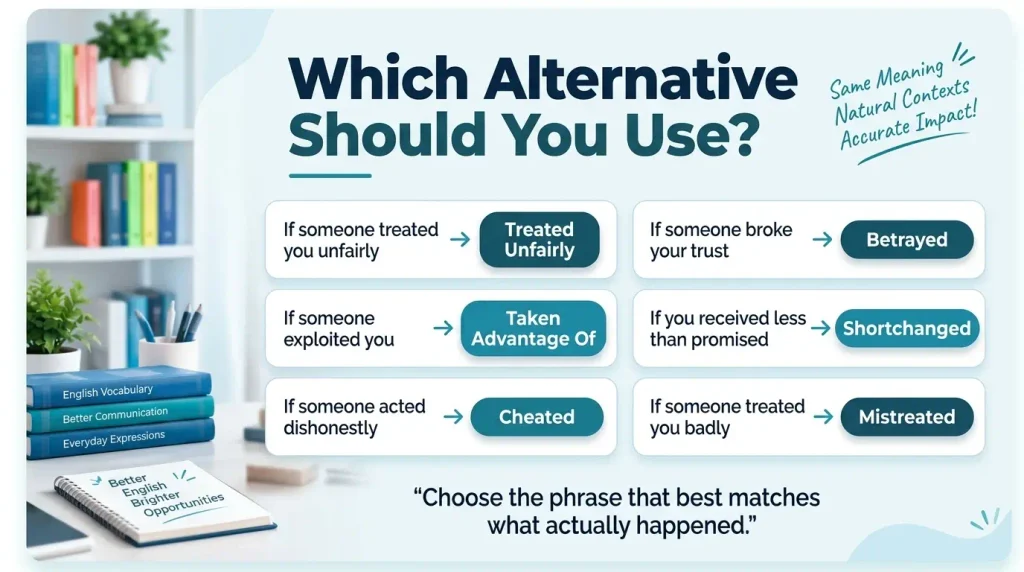
The best choice depends on what happened.
| Alternative | Main Meaning | Tone | Best Context |
| Treated unfairly | Received unfair treatment | Neutral | General, professional |
| Taken advantage of | Someone exploited you | Direct | Personal, financial |
| Cheated | Treated dishonestly | Strong | Money, agreements |
| Wronged | Treated unjustly | Serious | Emotional, formal |
| Shortchanged | Received less than deserved | Casual | Pay, money, credit |
| Betrayed | Someone broke your trust | Emotional | Relationships |
| Taken for granted | Your efforts were not valued | Mild | Personal, workplace |
| Disadvantaged | Put in a worse position | Formal | Work, academic |
| Mistreated | Treated badly | Serious | Work, personal |
| Let down | Disappointed | Mild | Everyday situations |
Professional Ways to Say “Screwed Over”
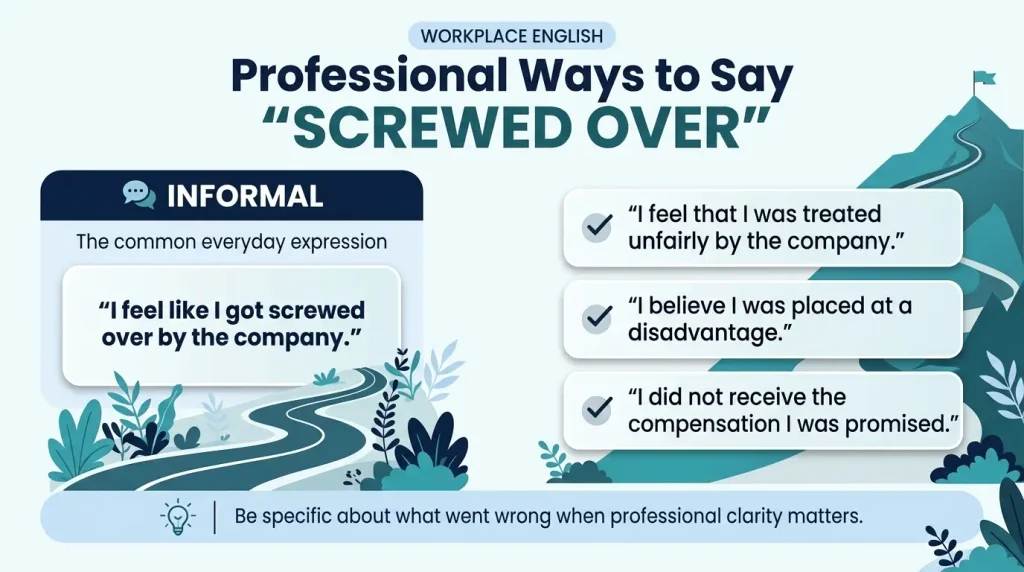
“Screwed over” can sound too casual for a work email, complaint, or report.
Instead, you can say:
- I was treated unfairly.
- I was placed at a disadvantage.
- I was not given the compensation I was promised.
- I feel that the situation was handled unfairly.
- I was not treated fairly.
- I did not receive the opportunity I was promised.
For example, instead of:
“I feel like I got screwed over by the company.”
You could write:
“I feel that I was treated unfairly by the company.”
If the problem is about money, be more specific:
“I believe I was not given the compensation we originally agreed on.”
Specific language often sounds clearer and more professional.
Casual Ways to Say “Screwed Over”
If you are talking to a friend, you may want to keep a casual tone.
Here are some natural options:
- They did me wrong.
- They treated me badly.
- They took advantage of me.
- They really let me down.
- I got the short end of the stick.
- I got a raw deal.
For example:
“I really got a raw deal when they changed the agreement.”
“Got a raw deal” is a good choice when you want to say that something was unfair.
“Screwed Over” vs. “Taken Advantage Of”
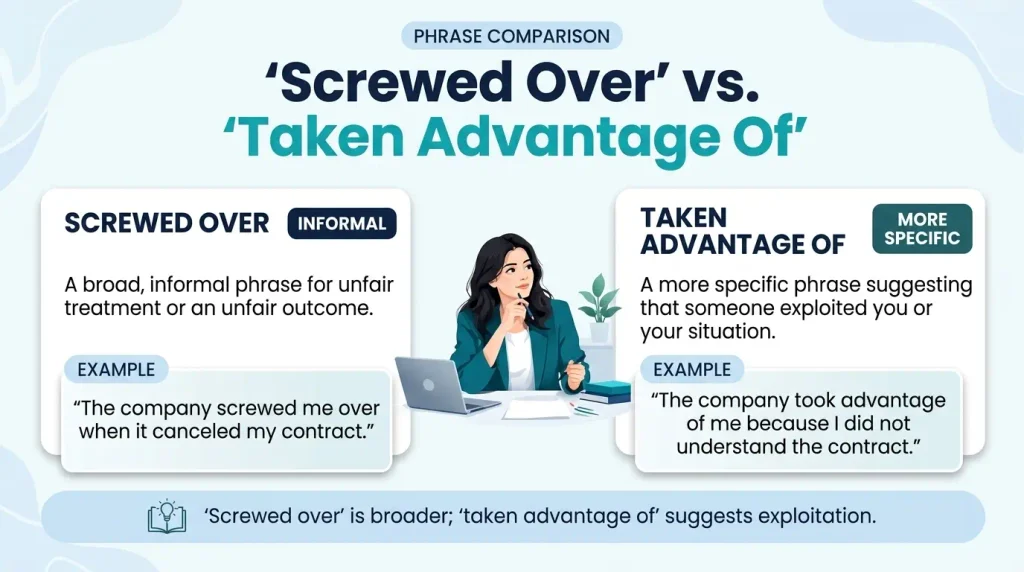
These phrases are similar, but they are not exactly the same.
“Screwed over” is a broad phrase. It can describe many types of unfair treatment.
“Taken advantage of” is more specific. It suggests that someone used you or your situation for their own benefit.
Compare these examples:
“The company screwed me over when it canceled my contract.”
This means the company treated the speaker unfairly.
Now compare:
“The company took advantage of me because I did not understand the contract.”
This suggests that the company used the speaker’s lack of knowledge for its own benefit.
The second phrase gives the reader more detail about what went wrong.
Common Mistakes When Replacing “Screwed Over”
Using “Betrayed” for Every Unfair Situation
“Betrayed” suggests broken trust.
If a store makes a billing mistake, “betrayed” may sound too strong. In that case, “treated unfairly” may be better.
Using “Cheated” Without Clear Evidence
“Cheated” can suggest that someone acted dishonestly on purpose.
If you are not sure what happened, “treated unfairly” is safer.
Using “Taken for Granted” for Financial Problems
Being taken for granted means your efforts were not valued.
It does not always mean that someone took your money or cheated you.
Using Formal Words in Casual Conversations
Words such as “disadvantaged” may sound too formal when talking with a friend.
In casual speech, “did me wrong,” “let me down,” or “got a raw deal” may sound more natural.
Ignoring the Difference in Strength
Not all alternatives have the same emotional force.
“Let down” usually means disappointed. “Cheated” can suggest serious dishonesty. “Taken advantage of” can suggest exploitation.
Choose the phrase that matches the situation.
Frequently Asked Questions
What is a polite way to say “screwed over”?
“Treated unfairly” is one of the best polite alternatives. You can also say “placed at a disadvantage” or “not treated fairly.”
What is a professional way to say “screwed over”?
In professional writing, “treated unfairly” is usually a good choice. You can also describe the exact problem, such as “I was not given the compensation I was promised.”
Is “taken advantage of” the same as “screwed over”?
Not exactly. “Taken advantage of” suggests that someone exploited you. “Screwed over” is broader and can describe many types of unfair treatment.
What is a stronger word for “screwed over”?
Depending on the situation, “betrayed,” “cheated,” “exploited,” or “wronged” may sound stronger. The right choice depends on what happened.
Is “screwed over” slang?
Yes. “Screwed over” is an informal expression. It is common in casual American English but is usually better avoided in formal or professional writing.
What is another way to say “I got screwed over”?
You could say “I was treated unfairly,” “I was taken advantage of,” “I was cheated,” “I got a raw deal,” or “I was shortchanged.”
What is a softer way to say “screwed over”?
“Let down,” “treated unfairly,” and “taken for granted” can be softer options. The best choice depends on the situation.
Final Thoughts
“Screwed over” is an informal way to describe unfair treatment. It can mean that someone cheated you, took advantage of you, or put you at a disadvantage.
The best replacement depends on the situation. Use “treated unfairly” for a neutral tone, “taken advantage of” for exploitation, “cheated” for dishonest treatment, and “shortchanged” when someone gives you less than you deserve.
For professional writing, avoid the slang phrase and explain the problem in clear, direct language.

Role: Lead Author & Content Specialist
James Mitchell is an experienced Lead Author at Elite’s Collective. He specializes in creating high-impact editorial content and driving core written projects designed to inform and engage readers.