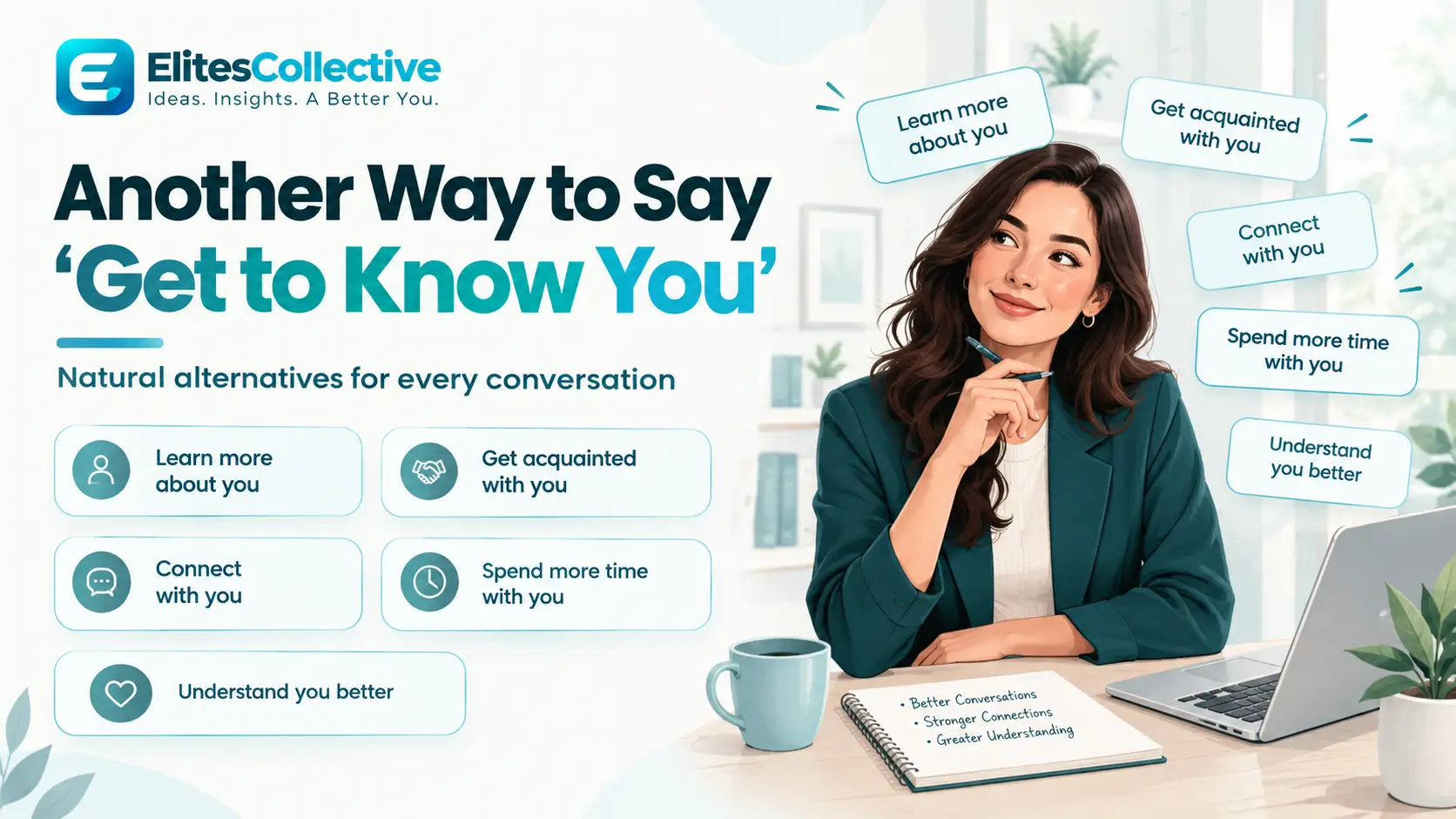
If you need another way to say “get to know you,” the best choice depends on the situation. Natural alternatives include “learn more about you,” “get acquainted with you,” “become familiar with you,” “connect with you,” and “spend time getting to know you.” Some sound more formal, while others are warmer or more conversational.
Key Takeaways
- “Learn more about you” is a natural, neutral alternative.
- “Get acquainted with you” works well in formal or professional situations.
- “Connect with you” emphasizes building a personal relationship.
- “Spend time getting to know you” sounds warm and personal.
- “Become familiar with you” is more formal and less personal.
- The best phrase depends on whether you mean friendship, networking, dating, or general conversation.
What Does “Get to Know You” Mean?
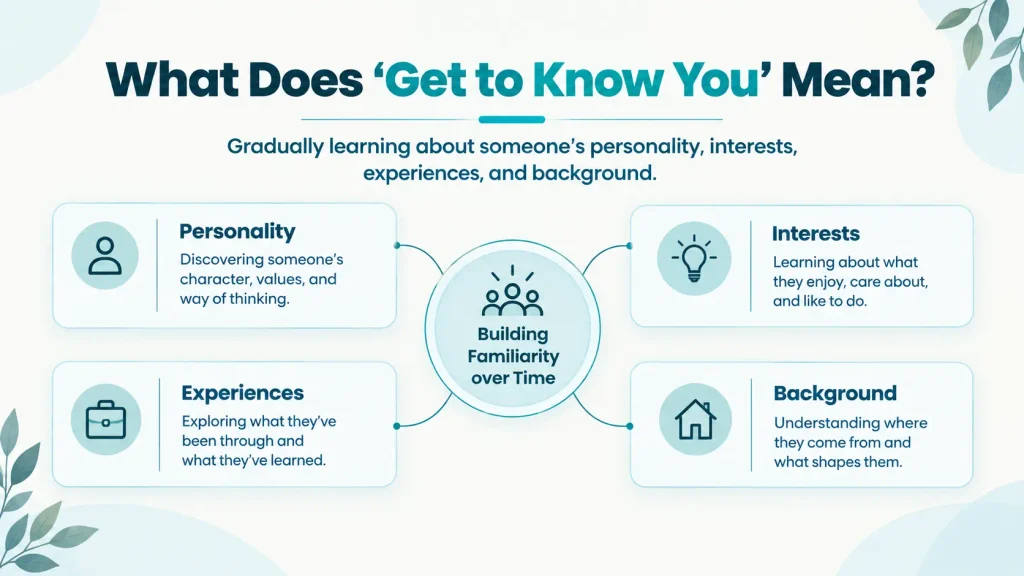
“Get to know you” means gradually learning about someone’s personality, interests, experiences, opinions, or background through conversation and time spent together.
For example:
“I’d love to get to know you better.”
The phrase usually suggests more than simply learning someone’s name or basic facts. It often implies developing familiarity or a relationship over time.
Depending on the context, you may want a phrase that sounds more professional, friendly, casual, or personal.
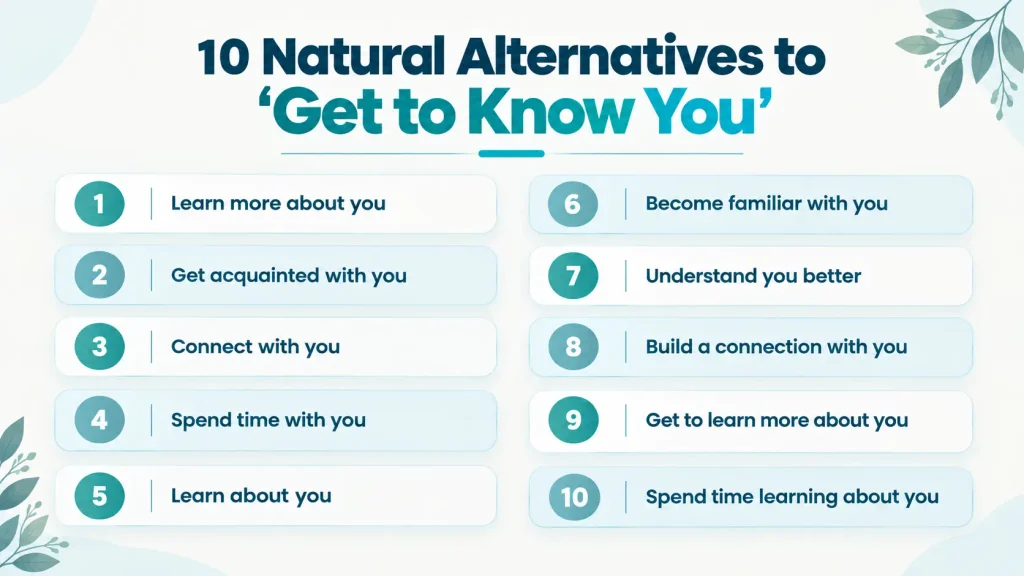
10 Natural Alternatives to “Get to Know You”
1. Learn More About You
“Learn more about you” is one of the closest and most natural alternatives. It works in both casual and professional conversations.
Example:
“I’d love to learn more about you and your experience.”
Best for: Neutral, professional, and friendly situations.
2. Get Acquainted With You
“Get acquainted with you” means becoming familiar with someone, usually after meeting them for the first time.
Example:
“It was nice having the opportunity to get acquainted with you.”
Best for: Formal and professional situations.
This phrase can sound more formal than the everyday expression “get to know you.”
3. Connect With You
“Connect with you” focuses more on building a relationship or finding common ground than simply learning facts about someone.
Example:
“I’d love to connect with you and hear more about your work.”
Best for: Networking, friendships, and professional communication.
4. Spend Time With You
If the goal is to become closer through shared experiences, “spend time with you” can work naturally.
Example:
“I’ve really enjoyed spending time with you.”
Best for: Friendships, dating, and personal relationships.
It does not directly mean learning about someone, so the context matters.
5. Learn About You
“Learn about you” is simple and direct. It can refer to someone’s background, interests, experiences, or personality.
Example:
“The first meeting gave us a chance to learn about each other.”
Best for: Neutral and conversational contexts.
When talking about a developing relationship, “learn more about you” often sounds more natural.
6. Become Familiar With You
“Become familiar with you” means gradually becoming accustomed to or knowledgeable about someone.
Example:
“Over time, the team will become familiar with you and your working style.”
Best for: Professional or formal contexts.
Because it sounds somewhat impersonal, it is usually not the best choice for close personal relationships.
7. Get to Understand You Better
This phrase emphasizes understanding someone’s personality, thoughts, feelings, or perspective.
Example:
“Talking with you has helped me understand you better.”
Best for: Personal, emotional, or reflective conversations.
It is slightly different from “get to know you” because it focuses more on understanding than familiarity.
8. Build a Connection With You
“Build a connection with you” emphasizes developing a meaningful relationship.
Example:
“I enjoyed the opportunity to build a connection with you.”
Best for: Professional networking, friendships, and personal relationships.
It sounds more intentional than simply saying “get to know you.”
9. Get to Learn More About You
This version can work in conversational English, although “learn more about you” is usually cleaner and more natural.
Example:
“I’d love to learn more about you and what you’re interested in.”
Best for: Friendly and casual conversations.
For polished writing, prefer “learn more about you.”
10. Spend Time Learning About You
This phrase highlights the process of learning about someone’s personality, interests, or experiences over time.
Example:
“I’ve enjoyed spending time learning about you and your interests.”
Best for: Personal relationships and warm conversations.
It is more specific than simply saying “get to know you.”
Which Alternative Should You Use?
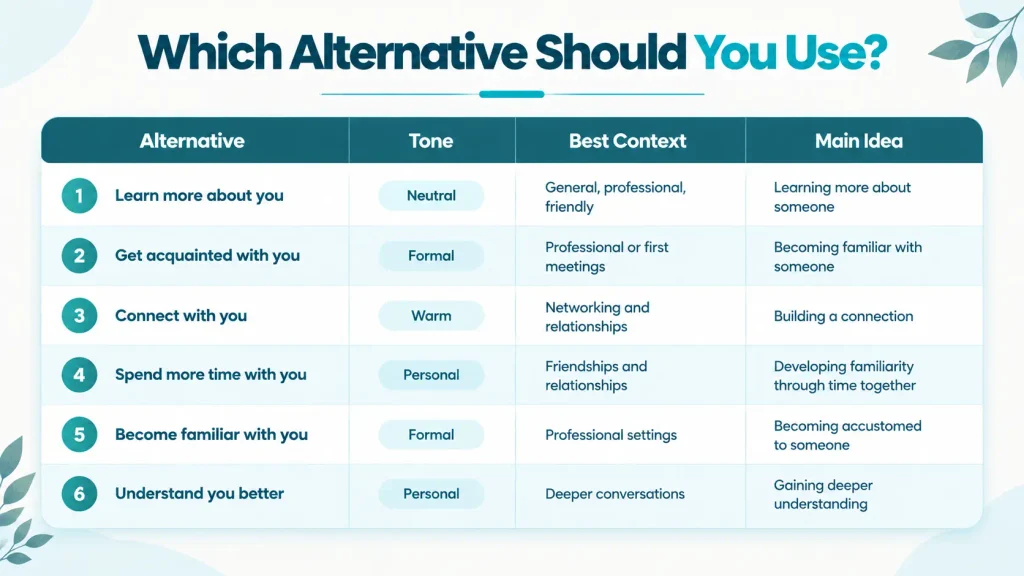
The right phrase depends on the relationship and tone you want.
| Alternative | Tone | Best Context |
| Learn more about you | Neutral | General, professional, friendly |
| Get acquainted with you | Formal | Professional or first meetings |
| Connect with you | Warm/neutral | Networking and relationships |
| Spend time with you | Personal | Dating and friendships |
| Learn about you | Neutral | General conversation |
| Become familiar with you | Formal | Workplace or professional settings |
| Understand you better | Personal | Deeper conversations |
| Build a connection with you | Warm | Networking and relationships |
| Get to learn more about you | Casual | Friendly conversation |
| Spend time learning about you | Warm | Personal relationships |
“Get to Know You” in Different Contexts
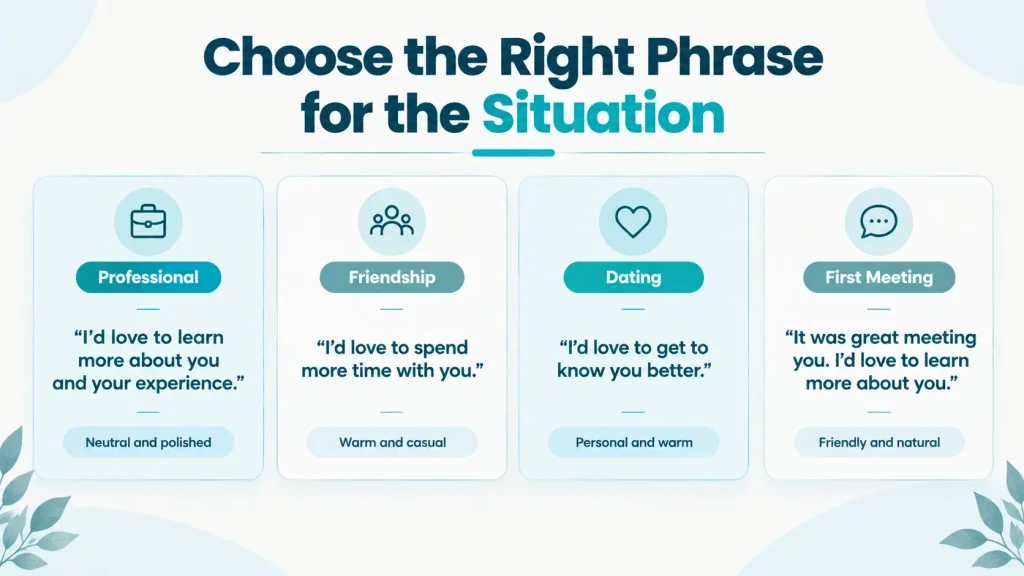
In Professional Situations
For workplace communication, “learn more about you” or “get acquainted with you” is usually more appropriate.
Example:
“It was great meeting you. I look forward to learning more about you and your experience.”
For networking, “connect with you” also works well:
Example:
“I’d be glad to connect with you and discuss your work.”
In Friendships
Casual phrases tend to sound more natural when you’re developing a friendship.
Example:
“I’d love to spend more time with you and learn more about you.”
You can also simply say:
“I’d like to get to know you better.”
In Dating or Romantic Situations
“Get to know you better” is particularly common because it suggests gradually learning about someone’s personality and interests.
Example:
“I’ve enjoyed talking with you and getting to know you better.”
“Spend more time with you” can also sound warm without being overly direct:
Example:
“I’d love to spend more time with you.”
In a First Meeting
When meeting someone for the first time, “get acquainted with you” is more formal, while “learn more about you” is more natural in everyday American English.
Formal:
“It was a pleasure getting acquainted with you.”
Natural:
“It was great meeting you. I’d love to learn more about you.”
Common Mistakes to Avoid
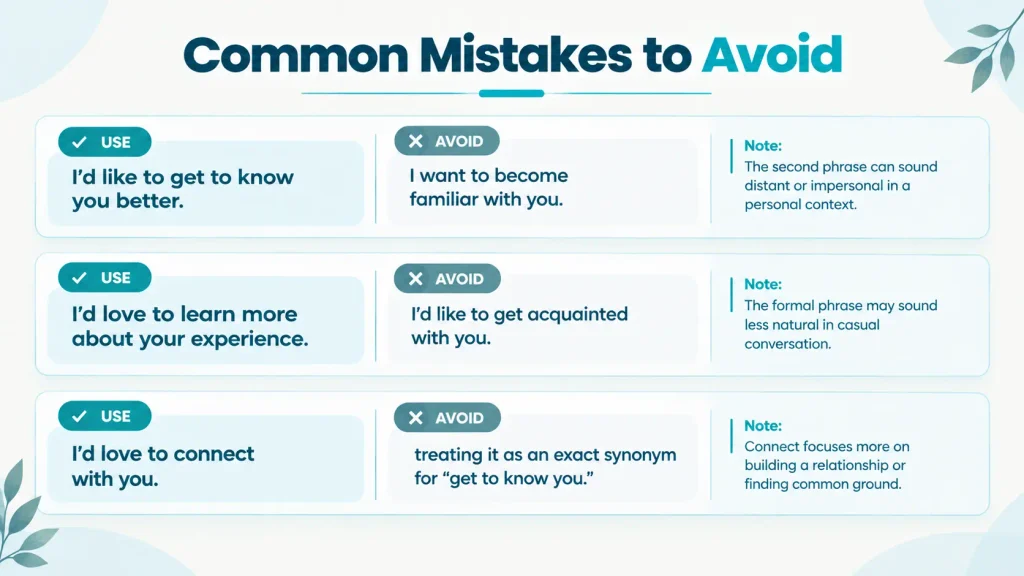
Using “Become Familiar With You” in a Romantic Context
Although grammatically correct, this phrase can sound distant or impersonal.
Instead of:
“I want to become familiar with you.”
Try:
“I’d like to get to know you better.”
Treating “Connect With You” as an Exact Synonym
“Connect with you” suggests forming a relationship or finding common ground. It does not always mean learning personal information.
For example:
“I’d love to connect with you about your work.”
This is more about establishing communication than learning about someone’s personal life.
Using Overly Formal Language in Casual Conversation
“Get acquainted with you” is correct, but it may sound formal among friends.
In everyday conversation, “get to know you better” or “learn more about you” usually feels more natural.
Frequently Asked Questions
What is a professional way to say “get to know you”?
“Learn more about you” is a natural professional option. “Get acquainted with you” can also work when a more formal tone is appropriate.
What is a casual way to say “get to know you”?
“Learn more about you” and “get to know you better” are both natural. “Spend more time with you” can work when you are talking about developing a friendship.
What is another way to say “I want to get to know you”?
You could say, “I’d like to learn more about you,” “I’d like to get acquainted with you,” or “I’d like to connect with you,” depending on the situation.
Is “get acquainted with you” the same as “get to know you”?
They are similar, but not identical. “Get acquainted with you” usually emphasizes becoming familiar with someone, while “get to know you” often suggests learning about their personality and developing a relationship.
What is a romantic way to say “get to know you”?
“I’d love to get to know you better” is natural and warm. “I’d love to spend more time with you” is another personal option.
Can I say “learn more about you” at work?
Yes. “Learn more about you” is appropriate in professional settings, especially when discussing someone’s background, experience, interests, or role.
Final Thoughts
“Get to know you” is already a natural American English expression, so the best alternative depends on what you want to emphasize. Use “learn more about you” for a neutral choice, “get acquainted with you” for a formal setting, “connect with you” for relationship-building, and “spend more time with you” for a more personal tone.

Role: English Language & Communication Writer
Daniel Carter is an English language writer specializing in workplace communication, professional vocabulary, resumes, emails, and career-focused English.