

“Beat the odds” means to succeed even though success seemed unlikely or the circumstances were unfavorable. Natural alternatives include “defy the odds,” “overcome adversity,” “succeed against the odds,” “defy expectations,” and “prevail despite the challenges.” The best choice depends on whether you want to emphasize difficulty, probability, expectations, or perseverance.
Key Takeaways
- “Beat the odds” describes an unexpectedly successful outcome.
- “Defy the odds” is one of the closest alternatives.
- “Overcome adversity” focuses more on hardship than probability.
- “Defy expectations” works when other people expected failure.
- “Prevail despite the challenges” emphasizes persistence.
- Not every synonym works in every context, so choose based on the meaning you want to highlight.
What Does “Beat the Odds” Mean?

“Beat the odds” is an idiomatic expression meaning to succeed despite having a disadvantage or facing a low chance of success. Cambridge Dictionary defines it as succeeding despite a disadvantage, while Oxford notes that “odds” can refer to circumstances that make something seem difficult or nearly impossible to achieve.
For example:
Despite starting with very little money, she beat the odds and built a successful business.
The phrase suggests that the result was not what people would normally have expected.
It can be used for sports, careers, education, business, personal goals, and many other situations.
10 Natural Ways to Say “Beat the Odds”
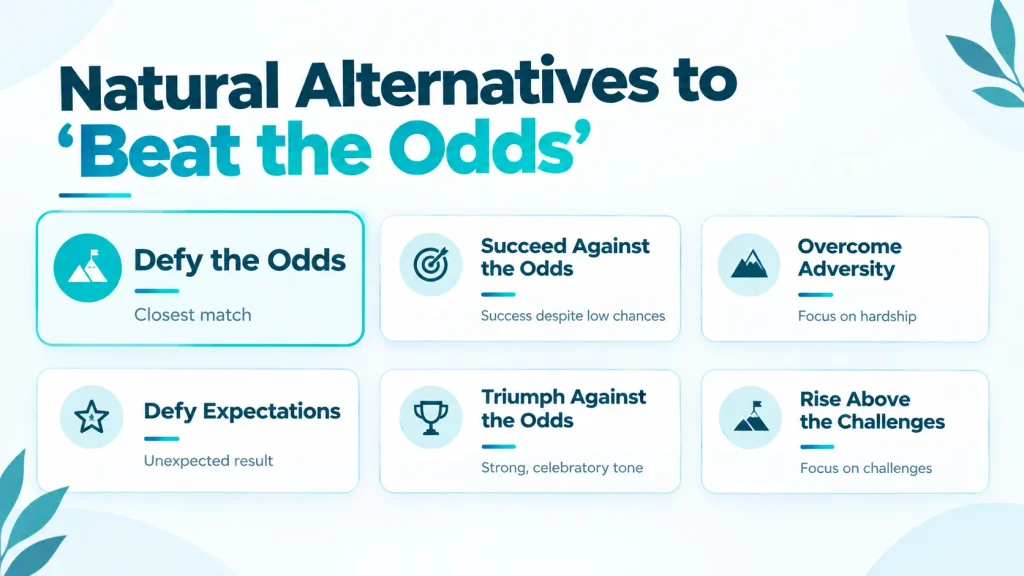
1. Defy the Odds
“Defy the odds” is probably the closest replacement for “beat the odds.” It means achieving something despite unfavorable probabilities or circumstances.
Example:
The young athlete defied the odds and qualified for the national championship.
Best for: Formal, neutral, and motivational writing.
Usage tip: Use this when you want to emphasize that the result went against what seemed likely.
2. Overcome Adversity
“Overcome adversity” focuses on successfully dealing with serious difficulties rather than specifically defeating unfavorable probabilities.
Example:
She overcame adversity and earned her college degree while working full time.
Best for: Personal stories, motivational writing, biographies, and professional contexts.
Usage tip: This is not an exact synonym. It works best when the main idea is hardship rather than an unlikely outcome.
3. Succeed Against the Odds
“Succeed against the odds” keeps almost the same meaning as “beat the odds” but sounds slightly more descriptive.
Example:
The small company succeeded against the odds and became profitable within two years.
Best for: Business, sports, education, and general writing.
Usage tip: This is a particularly useful alternative when you want to keep the original meaning while changing the wording.
4. Defy Expectations
“Defy expectations” means achieving a result that people did not expect.
Example:
The rookie defied expectations and finished among the top competitors.
Best for: Sports, careers, business, and personal achievements.
Usage tip: This phrase focuses on what people expected, not necessarily on statistical probability.
5. Prevail Despite the Challenges
“Prevail despite the challenges” emphasizes continuing successfully through difficult circumstances.
Example:
The team prevailed despite the challenges it faced during the season.
Best for: Formal writing, reports, speeches, and professional contexts.
Usage tip: This sounds more formal than “beat the odds,” so it may not be the best choice for casual conversation.
6. Triumph Against the Odds
“Triumph against the odds” has a strong, celebratory tone. It describes a significant victory or achievement under unfavorable circumstances.
Example:
The independent filmmaker triumphed against the odds and earned several major awards.
Best for: Inspirational writing, journalism, speeches, and major accomplishments.
Usage tip: “Triumph” sounds stronger and more dramatic than the neutral “succeed.”
7. Defeat the Odds
“Defeat the odds” is understandable and can be used as a variation of “beat the odds,” although “beat the odds” and “defy the odds” are more established choices.
Example:
The team worked together to defeat the odds and reach the finals.
Best for: Motivational and informal contexts.
Usage tip: Use this selectively. If you want the most natural standard expression, “defy the odds” or “succeed against the odds” is usually clearer.
8. Overcome the Odds
“Overcome the odds” emphasizes getting past unfavorable circumstances or a low likelihood of success.
Example:
She overcame the odds and became the first person in her family to graduate from college.
Best for: Personal achievements, education, careers, and inspirational writing.
Usage tip: This phrase is close to “beat the odds,” although “overcome adversity” is often more natural when the focus is on hardship itself.
9. Rise Above the Challenges
“Rise above the challenges” means continuing to succeed without allowing difficulties to prevent progress.
Example:
He rose above the challenges and continued building his business.
Best for: Personal development, motivational writing, and everyday English.
Usage tip: This expression focuses on resilience rather than whether success was statistically unlikely.
10. Achieve the Unlikely
“Achieve the unlikely” means accomplishing something that seemed improbable.
Example:
The startup achieved the unlikely by growing rapidly in an extremely competitive market.
Best for: Creative, editorial, and motivational writing.
Usage tip: This is less common than “defy the odds,” so use it when you specifically want to emphasize the unusual nature of the achievement.
“Beat the Odds” Alternatives at a Glance
| Alternative | Main Meaning | Tone | Best Context |
| Defy the odds | Succeed despite low chances | Neutral | General, professional |
| Overcome adversity | Get through serious hardship | Neutral | Personal, academic |
| Succeed against the odds | Succeed despite disadvantages | Neutral | General, business |
| Defy expectations | Do better than expected | Neutral | Sports, career |
| Prevail despite the challenges | Succeed through difficulties | Formal | Professional writing |
| Triumph against the odds | Achieve a major unexpected victory | Strong | Inspirational |
| Defeat the odds | Overcome unfavorable circumstances | Motivational | Informal, motivational |
| Overcome the odds | Get past unfavorable circumstances | Neutral | Personal, general |
| Rise above the challenges | Continue despite difficulties | Inspirational | Personal development |
| Achieve the unlikely | Accomplish something improbable | Creative | Editorial, motivational |
Which Alternative Should You Use?
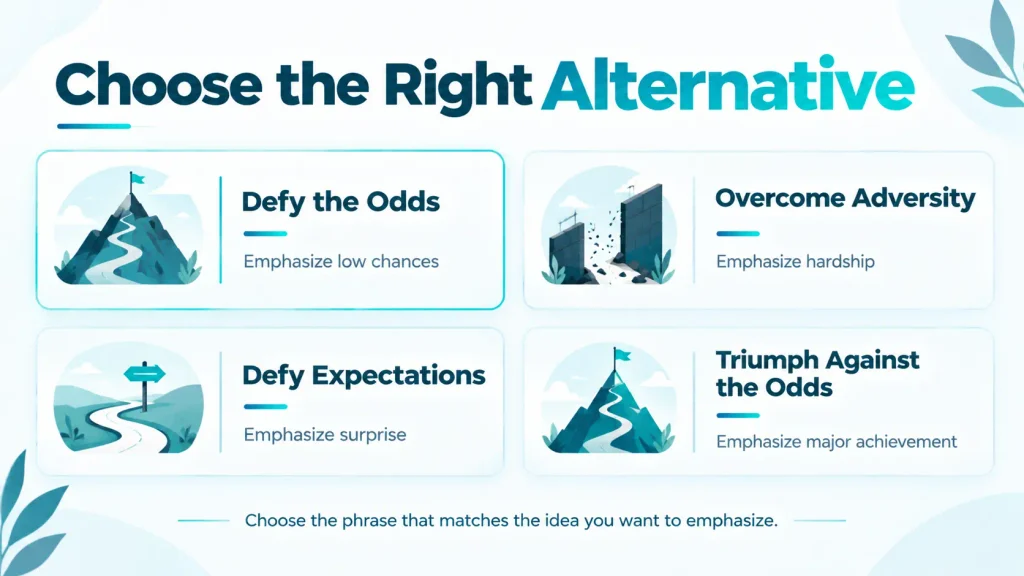
The right phrase depends on what you want to emphasize.
If you mean “succeed despite low chances”
Use:
- Defy the odds
- Succeed against the odds
- Overcome the odds
Example:
The underdog defied the odds and won the tournament.
If you mean “succeed despite hardship”
Use:
- Overcome adversity
- Rise above the challenges
- Prevail despite the challenges
Example:
She overcame adversity and completed her education.
If you mean “do better than people expected”
Use:
- Defy expectations
- Exceed expectations
Example:
The new employee defied expectations and quickly became a key member of the team.
If you mean “achieve something remarkable”
Use:
- Triumph against the odds
- Achieve the unlikely
Example:
The team triumphed against the odds to reach the championship game.
“Beat the Odds” vs. “Defy the Odds”
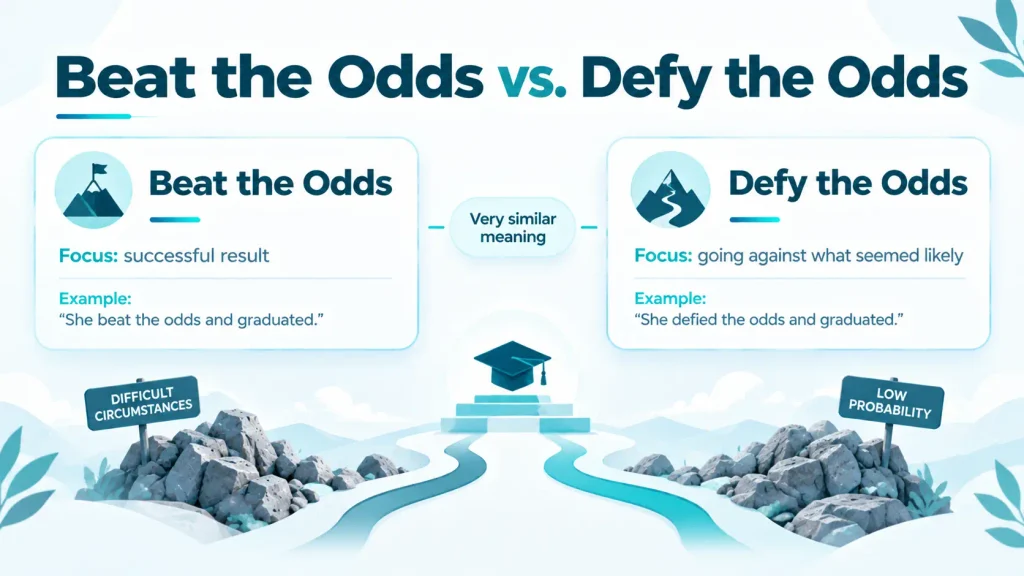
These expressions are extremely close, but there is a slight difference in emphasis.
“Beat the odds” describes the successful result. “Defy the odds” can place more emphasis on the fact that the outcome went against what seemed likely.
Beat the odds:
The team beat the odds and won the championship.
Defy the odds:
The team defied the odds by reaching the championship despite several major setbacks.
Both are natural American English expressions.
These are not exact synonyms.
“Beat the odds” suggests that success was unlikely.
“Overcome adversity” suggests that someone faced hardship and successfully dealt with it.
For example:
She beat the odds and became a professional athlete.
This highlights the unlikely achievement.
She overcame adversity after losing her home and continued training.
This highlights the difficult circumstances.
Choosing between them depends on whether probability or hardship is the main idea.
Common Mistakes to Avoid
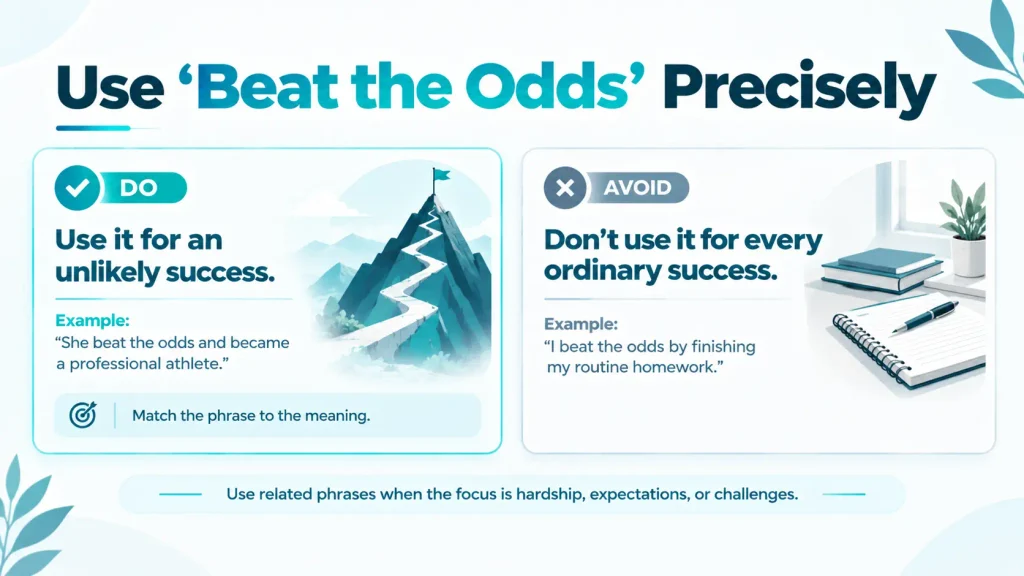
Using “beat the odds” for ordinary success
The expression normally suggests that success was difficult or unexpected.
Less appropriate:
I beat the odds by finishing my routine homework.
Better:
I beat the odds by passing the exam after missing several weeks of school.
Treating every alternative as an exact synonym
“Defy expectations” and “overcome adversity” are related to “beat the odds,” but they highlight different ideas.
- Odds → likelihood or probability
- Expectations → what people thought would happen
- Adversity → hardship or difficult circumstances
- Challenges → obstacles that must be handled
Using dramatic language for a minor achievement
“Triumph against the odds” sounds significant and celebratory. It may feel exaggerated when describing a small or expected accomplishment.
For everyday situations, “succeed despite the challenges” may sound more natural.
Frequently Asked Questions
What is another way to say “beat the odds”?
Some natural alternatives are “defy the odds,” “succeed against the odds,” “overcome the odds,” “overcome adversity,” and “defy expectations.” The best choice depends on whether you want to emphasize probability, hardship, or unexpected success.
Is “defy the odds” the same as “beat the odds”?
Yes, they are very close in meaning. Both describe succeeding despite unfavorable circumstances or a low likelihood of success. “Defy the odds” can put slightly more emphasis on going against what seemed likely.
What is a professional way to say “beat the odds”?
For professional writing, consider “succeed against the odds,” “overcome significant challenges,” “defy expectations,” or “achieve success despite significant obstacles.” Choose the phrase that accurately describes the situation.
What is a more formal way to say “beat the odds”?
“Prevail despite significant challenges” or “achieve success despite unfavorable circumstances” can sound more formal. “Defy the odds” is also appropriate in many professional and formal contexts.
Can I say “overcome adversity” instead of “beat the odds”?
Sometimes. “Overcome adversity” is best when the focus is on hardship. If the important point is that success was unlikely, “defy the odds” or “succeed against the odds” is more precise.
Is “against all odds” the same as “beat the odds”?
They are closely related but used differently. “Beat the odds” is a verb phrase describing what someone does, while “against all odds” is an expression describing the circumstances under which something happens.
Example:
She beat the odds and graduated.
Example:
Against all odds, she graduated.
What is the opposite of “beat the odds”?
Depending on the context, possible opposites include “fail despite the effort,” “fall short,” or “succumb to the challenges.” There is no single exact opposite in every situation.
Final Thoughts
“Beat the odds” is a useful expression for describing success that seemed unlikely. If you want the closest natural replacement, “defy the odds” or “succeed against the odds” usually works well. For hardship, choose “overcome adversity”; for unexpected results, “defy expectations” is often more precise.
The key is to match the alternative to the meaning you actually want—not simply replace the phrase word for word.

Role: Lead Author & Content Specialist
James Mitchell is an experienced Lead Author at Elite’s Collective. He specializes in creating high-impact editorial content and driving core written projects designed to inform and engage readers.