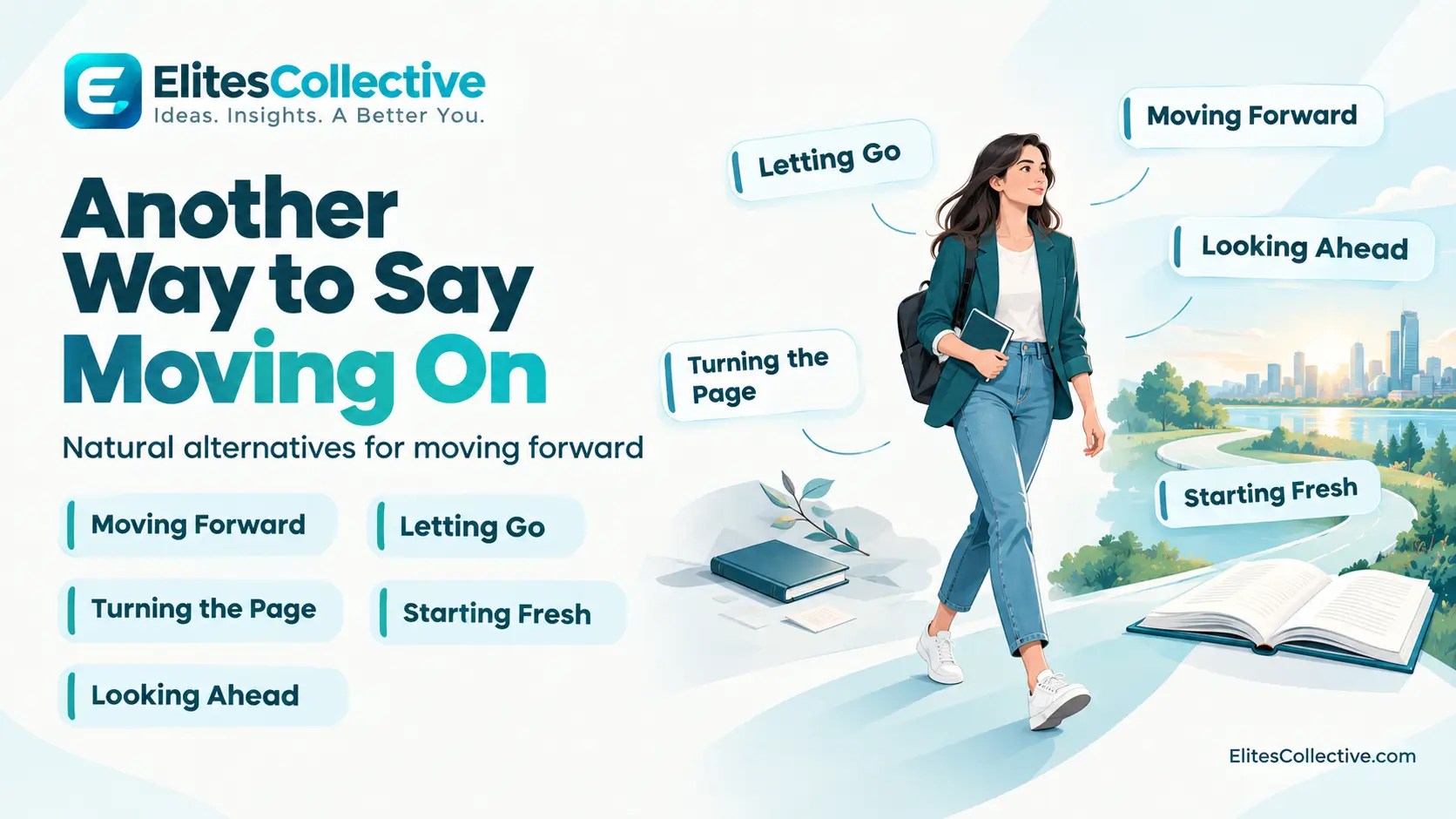
If you’re looking for another way to say “moving on,” the best choice depends on what you mean. You might mean accepting the end of something, leaving the past behind, continuing with your life, or progressing to a new stage. Natural alternatives include “moving forward,” “letting go,” “turning the page,” “starting fresh,” “getting past it,” and “looking ahead.”
Key Takeaways
- “Moving forward” is one of the most natural neutral alternatives.
- “Letting go” emphasizes releasing the past or an emotional attachment.
- “Turning the page” suggests leaving one chapter behind and beginning another.
- “Starting fresh” focuses on making a new beginning.
- “Getting past it” is casual and often used for difficult experiences.
- The right phrase depends on whether you are talking about relationships, personal growth, work, or everyday situations.
What Does “Moving On” Mean?
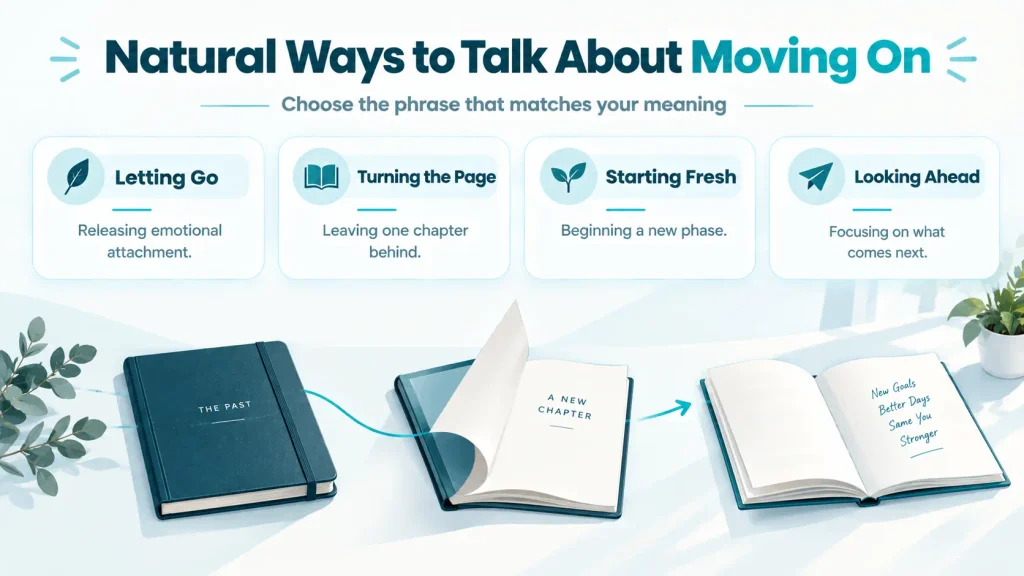
“Moving on” usually means leaving a past situation, experience, relationship, disappointment, or period of life behind and continuing with something new.
For example:
After the breakup, she decided it was time to move on.
Here, “moving on” means accepting that the relationship has ended and beginning to focus on life beyond it.
The phrase can also have a less emotional meaning:
Once we finish this project, we can move on to the next one.
In this sentence, “move on” simply means to proceed to something else.
Because the phrase has several uses, not every alternative works in every situation.
10 Natural Alternatives to “Moving On”
1. Moving Forward
“Moving forward” means continuing with your life, plans, or situation instead of remaining focused on the past.
Best for: Everyday, professional, personal, and emotional contexts
Example:
After learning from the mistake, he decided to focus on moving forward.
This is one of the safest alternatives because it sounds natural without being overly emotional.
2. Letting Go
“Letting go” means releasing an emotional attachment to something that happened in the past.
Best for: Emotional situations, relationships, disappointment, personal growth
Example:
Sometimes letting go of the past is the first step toward feeling better.
“Letting go” is not always an exact replacement for “moving on.” It focuses more strongly on releasing something emotionally.
3. Turning the Page
“Turning the page” is an idiomatic expression that means leaving one period of your life behind and beginning a new chapter.
Best for: Personal experiences, relationships, major life changes
Example:
After years of struggling with the situation, she was ready to turn the page.
It has a hopeful tone and works especially well when talking about a major transition.
4. Starting Fresh
“Starting fresh” means beginning again with a clean slate or a new approach.
Best for: New beginnings, life changes, work, relationships
Example:
He moved to another city to start fresh.
This phrase emphasizes the new beginning rather than the process of leaving the past behind.
5. Looking Ahead
“Looking ahead” means focusing on the future instead of dwelling on what has already happened.
Best for: Positive, motivational, professional, and personal contexts
Example:
We can’t change what happened, so let’s start looking ahead.
It sounds less emotional than “letting go” and works well in professional communication.
6. Getting Past It
“Getting past it” means recovering from or overcoming a difficult experience.
Best for: Casual conversations and difficult experiences
Example:
It took him a while, but he eventually got past the disappointment.
This is more conversational than “moving forward” and often suggests that something painful happened.
7. Leaving the Past Behind
“Leaving the past behind” directly expresses the idea of no longer allowing previous events to control your present or future.
Best for: Emotional, personal, and reflective writing
Example:
She decided to leave the past behind and concentrate on her future.
This phrase is clear and easy to understand, although it can sound more deliberate than simply saying “moving on.”
8. Starting a New Chapter
“Starting a new chapter” describes entering a new stage of life after an important change.
Best for: Relationships, graduation, career changes, relocation, personal growth
Example:
After graduating from college, Maya was excited to start a new chapter.
This expression has a positive and reflective tone.
9. Putting It Behind You
“To put something behind you” means to stop allowing a past event or problem to affect you.
Best for: Mistakes, arguments, setbacks, and difficult experiences
Example:
They apologized to each other and decided to put the argument behind them.
This phrase can be useful when the focus is on overcoming a specific event.
10. Moving Past It
“Moving past it” means recovering from or no longer being held back by a past problem.
Best for: Personal conflicts, mistakes, disappointments, and emotional situations
Example:
I know the experience was difficult, but I think you’re ready to move past it.
It is close in meaning to “moving on,” but often focuses on overcoming one particular situation.
Which Alternative Should You Use?
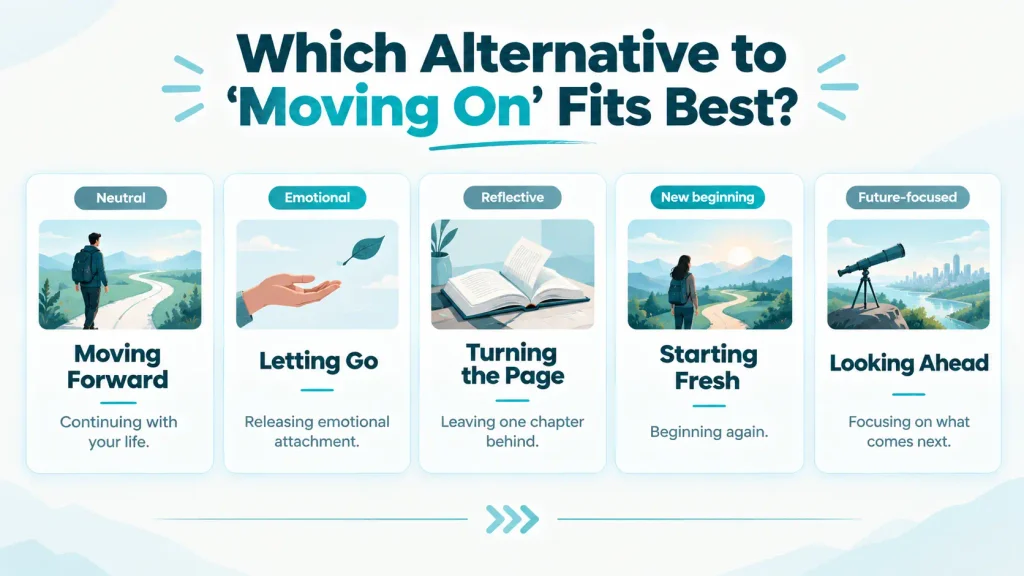
The best expression depends on the situation and the feeling you want to communicate.
| Alternative | Main Meaning | Tone | Best Context |
| Moving forward | Continuing with life or plans | Neutral | General, professional, personal |
| Letting go | Releasing an emotional attachment | Emotional | Relationships, personal growth |
| Turning the page | Leaving one period behind | Reflective | Life changes, relationships |
| Starting fresh | Beginning again | Positive | New beginnings |
| Looking ahead | Focusing on the future | Positive | Personal, professional |
| Getting past it | Recovering from something difficult | Casual | Problems, disappointments |
| Leaving the past behind | Separating yourself from the past | Reflective | Emotional situations |
| Starting a new chapter | Entering a new stage | Hopeful | Major life changes |
| Putting it behind you | No longer dwelling on an event | Neutral | Mistakes, conflicts |
| Moving past it | Overcoming a specific problem | Neutral | Setbacks, conflicts |
Another Way to Say “Moving On” After a Breakup
When talking about the end of a romantic relationship, emotional alternatives usually sound more natural.
You could say:
- “I’m ready to move forward.”
- “I’m learning to let go.”
- “I’m ready to turn the page.”
- “I’m starting a new chapter.”
- “I’m leaving the past behind.”
- “I’m ready to start fresh.”
For example:
After the breakup, I realized I needed to let go and focus on myself.
Or:
I’m ready to turn the page and start a new chapter in my life.
“Letting go” is particularly useful when you want to emphasize emotional healing, while “starting a new chapter” puts more attention on what comes next.
Another Way to Say “Moving On” at Work
“Moving on” can also mean progressing from one task or topic to another. In professional situations, emotional expressions such as “letting go” usually wouldn’t fit.
Better choices include:
- Moving forward
- Proceeding
- Continuing
- Moving to the next step
- Moving to the next topic
- Shifting focus
- Going forward
For example:
Now that we’ve reviewed the proposal, let’s move on to the budget.
You could make this more professional by saying:
Now that we’ve reviewed the proposal, let’s move to the next part of the discussion.
Or:
With the proposal finalized, we can move forward with the next stage.
The best choice depends on whether you mean changing the topic or progressing with a plan.
Another Way to Say “Moving On” From the Past
If you are talking about personal growth, several expressions work well:
I’m learning to let go of the past.
I’m ready to leave the past behind.
I’m focusing on what comes next.
I’m looking ahead instead of dwelling on what happened.
I’m ready to start a new chapter.
These phrases aren’t identical. “Looking ahead” focuses on the future, while “letting go” focuses on releasing the past.
Common Mistakes When Using Alternatives
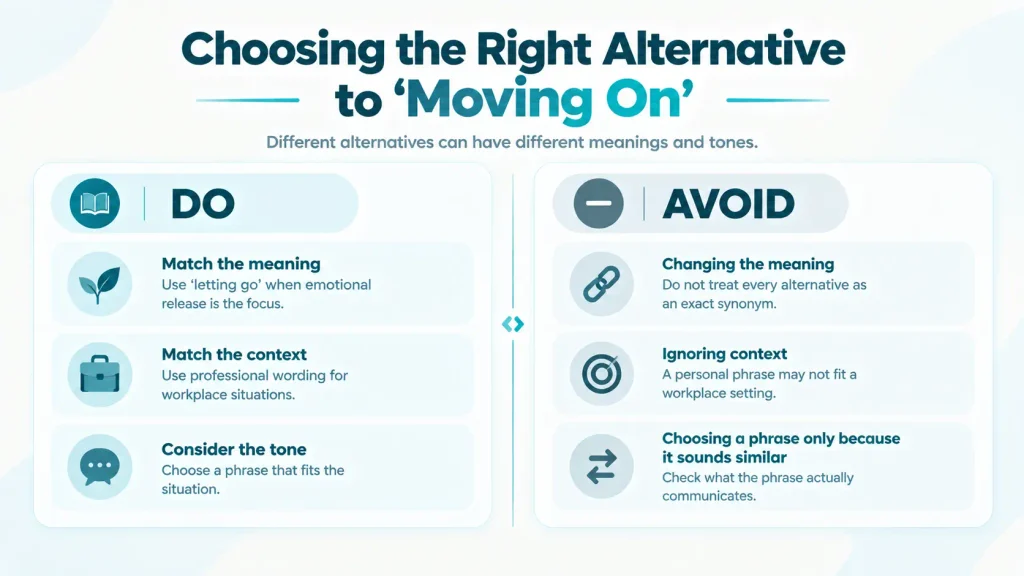
Treating Every Alternative as an Exact Synonym
“Letting go,” “moving forward,” and “starting fresh” are related to “moving on,” but they emphasize different ideas.
Choose the expression based on what you actually want to say.
Using Emotional Expressions in Professional Writing
Phrases such as “turning the page” or “letting go” may sound too personal in a business email.
For workplace communication, “moving forward,” “proceeding,” or “going forward” may be more appropriate.
Using “Starting Fresh” When You Only Mean Continuing
“Starting fresh” suggests a new beginning. If you simply mean continuing with the next task, “moving forward” or “proceeding” is more accurate.
Assuming “Moving On” Always Means Forgetting
Moving on doesn’t necessarily mean forgetting what happened. It can simply mean accepting the situation and continuing with your life.
FAQs About “Moving On”
What is the best synonym for “moving on”?
“Moving forward” is one of the most natural general alternatives. However, “letting go,” “starting fresh,” or “turning the page” may be better depending on the context.
What is another way to say “moving on” in a relationship?
You can say “moving forward,” “letting go,” “starting a new chapter,” “turning the page,” or “leaving the past behind.” The best option depends on whether you want a neutral, emotional, or hopeful tone.
What is a professional way to say “moving on”?
In professional English, “moving forward,” “proceeding,” “continuing,” or “moving to the next step” are useful choices.
Is “moving forward” the same as “moving on”?
They are closely related, but not always identical. “Moving forward” usually emphasizes continuing toward the future, while “moving on” can emphasize leaving a previous situation behind.
Is “letting go” the same as “moving on”?
Not exactly. “Letting go” focuses on releasing an emotional attachment, while “moving on” is broader and can simply mean continuing with life or moving to something else.
What is a positive way to say “moving on”?
“Moving forward,” “looking ahead,” “starting fresh,” and “starting a new chapter” can all communicate a positive sense of progress.
Can “moving on” be used for work?
Yes. For example, “Let’s move on to the next topic” means to proceed to another subject. In more formal workplace writing, “moving forward” or “proceeding” may sound more appropriate.
Final Thoughts
“Moving on” is a flexible phrase, so the best alternative depends on your intended meaning. Use “moving forward” for general progress, “letting go” for emotional release, “turning the page” for leaving a chapter behind, and “starting fresh” for a new beginning. If you’re writing professionally, “moving forward” or “proceeding” will usually fit better than more emotional expressions.

Role: Author & Contributing Writer
Olivia Bennett is a dedicated Author at Elite’s Collective, focused on delivering clear, well-researched, and engaging articles tailored to the audience.