
Looking for another way to say “in lieu of gifts”? Natural alternatives include “instead of gifts,” “in place of gifts,” “rather than gifts,” “no gifts please,” and “your presence is enough.” The best choice depends on whether you want to politely decline gifts, suggest donations, or simply tell guests that gifts are unnecessary.
Key Takeaways
- “Instead of gifts” is the clearest everyday alternative to “in lieu of gifts.”
- “In place of gifts” works well in invitations and announcements.
- “No gifts please” is direct and easy to understand.
- “Your presence is enough” sounds warmer and more personal.
- If you want guests to make a donation, say so directly rather than using a vague alternative.
- “In lieu of gifts” is formal, so simpler wording may sound more natural in casual invitations.
What Does “In Lieu of Gifts” Mean?
“In lieu of gifts” means instead of receiving gifts. It is commonly used on invitations for weddings, birthdays, anniversaries, memorials, and other special events.
For example:
In lieu of gifts, please consider making a donation to our favorite charity.
The phrase “in lieu of” is fairly formal. In everyday American English, “instead of gifts” is usually easier and more conversational.
The right alternative also depends on what you want guests to do. If you do not want gifts at all, “no gifts please” is clear. If you would prefer donations, mention donations directly.
10 Natural Alternatives to “In Lieu of Gifts”

1. Instead of Gifts
“Instead of gifts” is the simplest and most natural alternative.
It has the same basic meaning as “in lieu of gifts” but sounds less formal. It works well on invitations, event websites, and personal messages.
Example:
Instead of gifts, please consider donating to the local food bank.
Best for: Everyday, friendly, and semi-formal communication.
2. In Place of Gifts
“In place of gifts” is very close in meaning to “in lieu of gifts.” It sounds polished without being overly formal.
It is a good choice when you want your invitation to sound respectful and straightforward.
Example:
In place of gifts, we would appreciate donations to the animal shelter.
Best for: Invitations, announcements, and formal events.
3. Rather Than Gifts
“Rather than gifts” clearly tells guests that you prefer something else instead of traditional presents.
This wording can sound natural when followed by a specific request.
Example:
Rather than gifts, we’d love for you to bring a favorite book for our new home library.
Best for: Personal invitations and warm, conversational writing.
4. Instead of Bringing Gifts
If your main goal is to tell guests not to bring presents to the event, “instead of bringing gifts” makes that meaning especially clear.
Example:
Instead of bringing gifts, please bring a canned food item for the community pantry.
This version is useful when you are replacing gifts with another type of contribution.
Best for: Birthday parties, showers, community events, and casual gatherings.
5. No Gifts Please
“No gifts please” is shorter and more direct. It does not suggest that guests should bring or donate something else. It simply tells them that gifts are unnecessary.
Example:
No gifts please. Your presence is all we need.
This is often a better choice than “in lieu of gifts” when you genuinely do not want presents.
Best for: Birthdays, casual celebrations, children’s parties, and family events.
6. Please Don’t Bring Gifts
“Please don’t bring gifts” is another clear and friendly option.
Unlike “in lieu of gifts,” this phrase focuses directly on what guests should avoid doing.
Example:
Please don’t bring gifts. We’re just looking forward to celebrating together.
It sounds natural in personal messages and informal invitations.
Best for: Casual events and friendly invitations.
7. Your Presence Is Enough
“Your presence is enough” gives the message a warmer and more appreciative tone.
Instead of simply saying that gifts are unnecessary, it emphasizes that spending time together is what matters.
Example:
Your presence is enough. We can’t wait to celebrate with you!
This is especially suitable when you want the invitation to feel personal rather than restrictive.
Best for: Birthdays, anniversaries, weddings, and family celebrations.
8. Your Presence Is the Only Gift We Need
This expression takes the same idea a little further. It tells guests that their attendance is more meaningful to you than a physical present.
Example:
Your presence is the only gift we need, so please don’t feel obligated to bring anything.
The wording feels warm and sincere, making it useful for milestone celebrations.
Best for: Weddings, anniversaries, milestone birthdays, and family events.
9. Donations Are Welcome Instead of Gifts
If you want guests to donate money or goods to a cause, it is better to state that request directly.
“Donations are welcome instead of gifts” makes the preferred alternative unmistakable.
Example:
Donations are welcome instead of gifts. If you’d like to contribute, please support the local animal rescue.
This wording is more specific than simply saying “in lieu of gifts.”
Best for: Charity events, memorials, fundraisers, and cause-related celebrations.
10. Please Consider a Donation Instead of a Gift
This is a polite way to encourage charitable giving without making it sound mandatory.
It works particularly well when you want guests to have a choice.
Example:
Please consider a donation instead of a gift to help support children’s literacy programs.
The phrase clearly explains what you would prefer while maintaining a gracious tone.
Best for: Weddings, birthdays, memorials, and charitable celebrations.
“In Lieu of Gifts” vs. “Instead of Gifts”
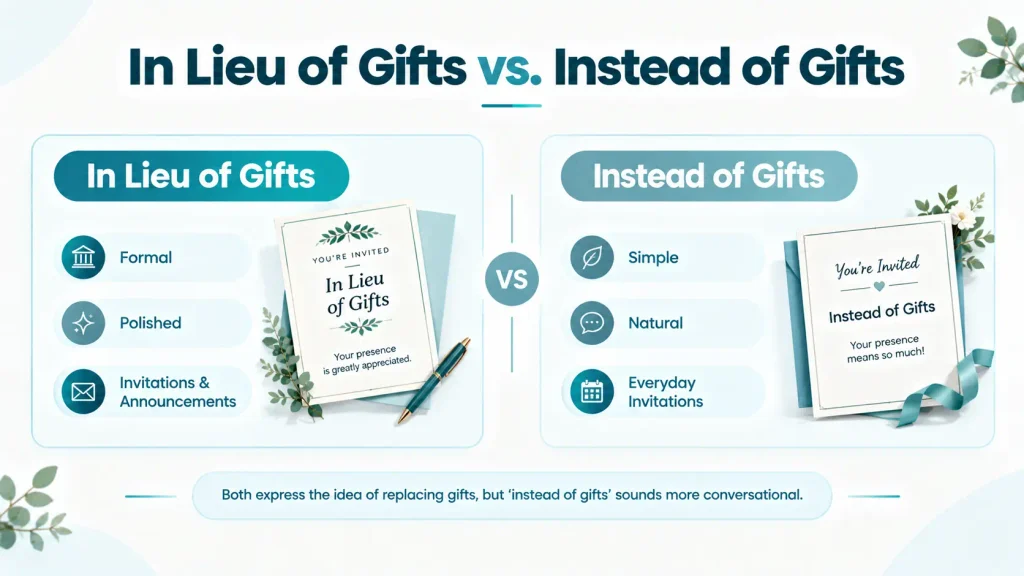
Both phrases communicate the same basic idea, but their tone is different.
| Phrase | Tone | Best Context |
| In lieu of gifts | Formal | Formal invitations and announcements |
| Instead of gifts | Neutral | Most everyday situations |
| In place of gifts | Polished | Invitations and announcements |
| Rather than gifts | Conversational | Personal invitations |
| No gifts please | Direct | Casual celebrations |
| Please don’t bring gifts | Friendly | Informal events |
| Your presence is enough | Warm | Personal celebrations |
| Donations are welcome instead of gifts | Clear | Charity-focused events |
For most readers, “instead of gifts” is the easiest replacement for “in lieu of gifts.” If you want a warmer message, “your presence is enough” may work better.
How to Choose the Right Alternative
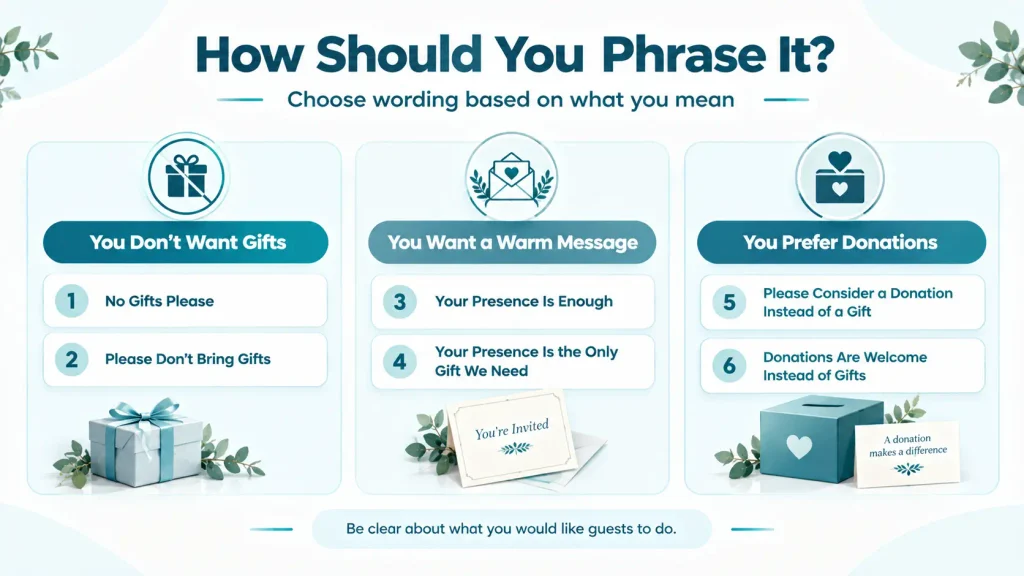
The best wording depends on the message you want to send.
If You Want Simple and Clear
Use:
Instead of gifts
It is easy to understand and works in almost any situation.
If You Want a Formal Tone
Use:
In place of gifts
This keeps the polished tone of “in lieu of gifts” without sounding quite as formal.
If You Do Not Want Gifts at All
Use:
No gifts please
or
Please don’t bring gifts.
These phrases are more direct than “in lieu of gifts.”
If You Want a Warm and Personal Message
Use:
Your presence is enough.
This focuses on the guest rather than on the absence of gifts.
If You Want Donations
Be specific:
Please consider a donation instead of a gift.
This tells guests exactly what you would like them to do.
Common Mistakes to Avoid
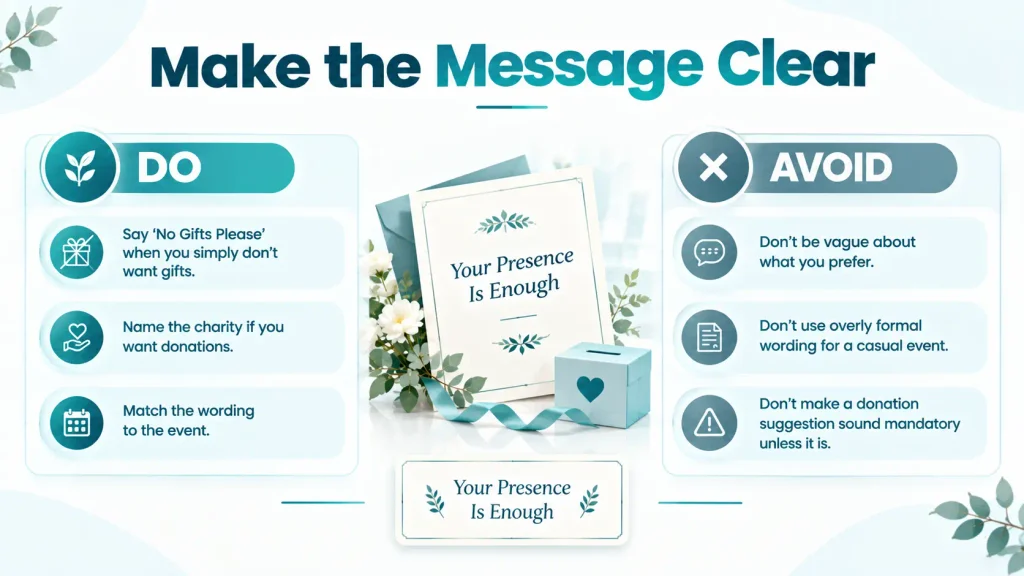
Using “In Lieu of Gifts” When You Mean “No Gifts”
These phrases are not always interchangeable.
“In lieu of gifts” usually suggests that something else is preferred instead of gifts. If you simply do not want presents, “no gifts please” is clearer.
Being Too Vague About Donations
If you want guests to donate to a particular organization, say so.
Instead of:
In lieu of gifts, we’d appreciate your support.
Try:
Instead of gifts, please consider donating to the local animal shelter.
The second version tells guests exactly what you mean.
Using Very Formal Language for a Casual Party
“In lieu of gifts” can sound more formal than necessary for a relaxed birthday party.
For example:
No gifts please. Just come ready to celebrate!
may sound more natural than:
In lieu of gifts, your attendance is requested.
Match the wording to the event.
Making a Gift Request Sound Like an Obligation
If you are suggesting donations or another contribution, polite wording can make the request feel more gracious.
“Please consider a donation instead of a gift” gives guests a choice, while “Bring a donation instead of a gift” sounds more direct.
Frequently Asked Questions
What is another way to say “in lieu of gifts”?
Common alternatives include “instead of gifts,” “in place of gifts,” “rather than gifts,” “no gifts please,” and “your presence is enough.” The best option depends on whether you want to suggest an alternative or simply decline gifts.
Is “instead of gifts” more casual than “in lieu of gifts”?
Yes. “Instead of gifts” is simpler and more conversational. “In lieu of gifts” has a more formal tone and is often used in invitations or announcements.
How do you politely say no gifts on an invitation?
You can write “No gifts please,” “Please don’t bring gifts,” or “Your presence is enough.” The last option has a warmer and more personal tone.
How do you ask for donations instead of gifts?
Be direct and polite. For example: “Please consider a donation instead of a gift.” If you have a specific charity in mind, include its name or donation information.
Is “in place of gifts” grammatically correct?
Yes. “In place of” means “instead of,” so “in place of gifts” is a grammatically correct alternative to “in lieu of gifts.”
What is a warm way to say “no gifts”?
“Your presence is enough” or “Your presence is the only gift we need” can sound warmer than simply saying “no gifts.”
What should I write instead of “in lieu of gifts” on a birthday invitation?
For a casual birthday invitation, “No gifts please” or “Your presence is enough” usually sounds natural. If you want donations, you can say, “Please consider a donation instead of a gift.”
Final Thoughts
“In lieu of gifts” is a correct and polished phrase, but it can sound formal in everyday American English. For a simpler message, use “instead of gifts” or “in place of gifts.” If you do not want presents at all, “no gifts please” is clearer. For a warmer invitation, “your presence is enough” can make the message feel more personal.
The most important point is to choose wording that clearly communicates what you want guests to do. If you prefer donations, say so. If you simply want people to come and celebrate with you, a warm “your presence is enough” may be all you need.

Role: English Language & Communication Writer
Daniel Carter is an English language writer specializing in workplace communication, professional vocabulary, resumes, emails, and career-focused English.