
If you want another way to say “you are awesome,” you can choose from expressions such as “you’re amazing,” “you’re incredible,” “you’re fantastic,” “you’re impressive,” and “you’re the best.” The best choice depends on whether you want to sound casual, warm, enthusiastic, or more polished.
Key Takeaways
- “You’re amazing” is one of the most natural alternatives.
- “You’re incredible” expresses strong admiration.
- “You’re fantastic” sounds upbeat and friendly.
- “You’re impressive” works well when praising someone’s ability or achievement.
- “You’re the best” is warm, casual, and personal.
- For professional situations, “You did an outstanding job” is usually more appropriate than “You’re awesome.”
What Does “You Are Awesome” Mean?
“You are awesome” is an informal way to express strong approval, admiration, or appreciation for someone. It can describe a person’s personality, actions, skills, appearance, or something helpful they have done.
For example:
“Thanks for helping me with my project. You’re awesome!”
The phrase is friendly and positive, but it can sound quite casual. If you want a different tone, another expression may fit better.
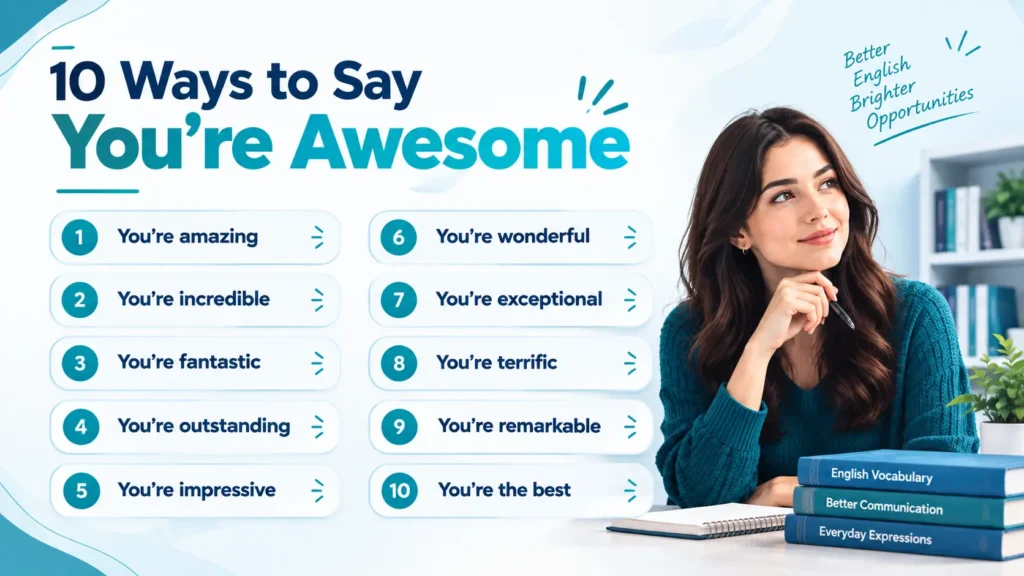
10 Natural Ways to Say “You Are Awesome”
1. You’re Amazing
“You’re amazing” is one of the closest and most natural alternatives to “you’re awesome.” It shows strong admiration and works in many everyday situations.
Example:
“Thanks for staying late to help me finish this. You’re amazing!”
Best for: Friends, family, coworkers, and casual conversations.
2. You’re Incredible
“You’re incredible” communicates a high level of admiration. It can sound more enthusiastic than “you’re awesome.”
Example:
“You managed to solve that problem in five minutes. You’re incredible!”
Best for: Praising impressive skills, achievements, or actions.
3. You’re Fantastic
“You’re fantastic” has an upbeat, friendly tone. It can praise someone personally or show appreciation for something they have done.
Example:
“Thanks for organizing everything. You’re fantastic!”
Best for: Friendly conversations and positive feedback.
4. You’re Wonderful
“You’re wonderful” feels warmer and more heartfelt than “you’re awesome.” It often focuses on someone’s kindness, personality, or thoughtful behavior.
Example:
“You always know how to make people feel welcome. You’re wonderful.”
Best for: Friends, family, and sincere personal compliments.
5. You’re Impressive
“You’re impressive” focuses more on someone’s ability, performance, knowledge, or achievement.
Example:
“You learned all those new techniques in just a few weeks. You’re impressive.”
Best for: Skills, accomplishments, work, and achievements.
6. You’re Amazing at This
If you want to praise a particular skill rather than someone’s entire personality, “you’re amazing at this” is more specific.
Example:
“You’re amazing at explaining complicated ideas in a simple way.”
Best for: Skills, talents, hobbies, and professional abilities.
7. You’re the Best
“You’re the best” is a casual and affectionate way to show appreciation. It is especially common after someone helps you.
Example:
“You picked up my favorite coffee? You’re the best!”
Best for: Friends, family, partners, and informal conversations.
8. You’re Incredible at What You Do
This phrase gives the compliment a more specific focus. It praises someone’s ability or performance without sounding as casual as “you’re awesome.”
Example:
“Your presentations are always clear and engaging. You’re incredible at what you do.”
Best for: Work, creative skills, and professional achievements.
9. You’re Truly Exceptional
“You’re truly exceptional” is a stronger and more polished compliment. It suggests that someone’s abilities or qualities stand out from others.
Example:
“Your dedication to the team has been remarkable. You’re truly exceptional.”
Best for: Formal praise, professional recognition, and significant achievements.
10. You Did an Outstanding Job
When “awesome” refers specifically to something someone has accomplished, “you did an outstanding job” can be more precise.
Example:
“The presentation was clear, organized, and persuasive. You did an outstanding job.”
Best for: Workplace feedback, academic work, presentations, and achievements.
Which Alternative Should You Use?
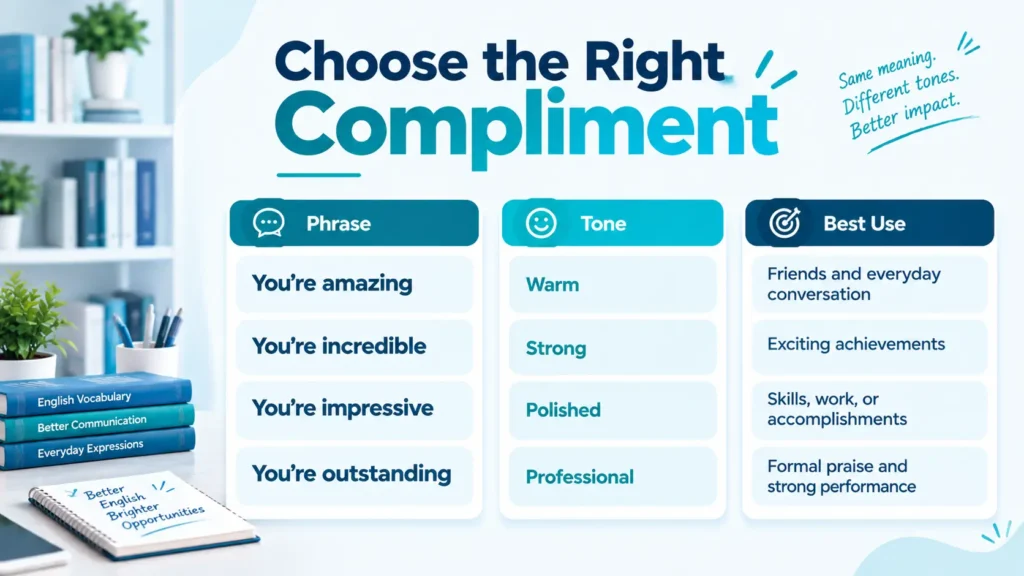
| Alternative | Tone | Best Context |
| You’re amazing | Friendly, enthusiastic | Everyday conversations |
| You’re incredible | Strong, admiring | Impressive achievements |
| You’re fantastic | Upbeat, casual | Friends and coworkers |
| You’re wonderful | Warm, sincere | Personal compliments |
| You’re impressive | Polished, admiring | Skills and accomplishments |
| You’re amazing at this | Specific, positive | Talents and abilities |
| You’re the best | Casual, affectionate | Appreciation |
| You’re incredible at what you do | Strong, polished | Professional praise |
| You’re truly exceptional | Formal, powerful | Recognition and achievement |
| You did an outstanding job | Professional, specific | Work or completed tasks |
“You’re Awesome” vs. “You’re Amazing”
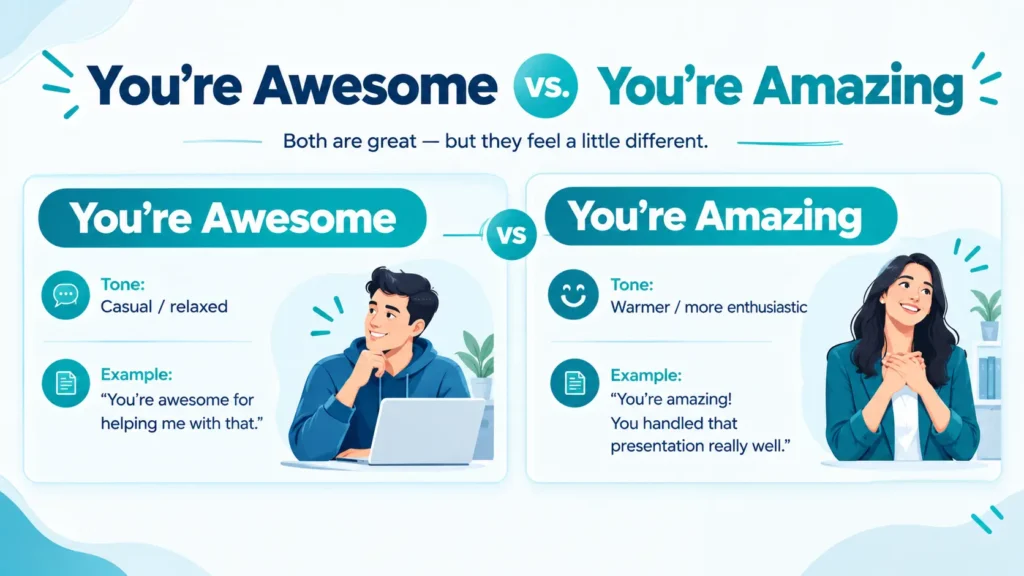
These phrases are very similar, but their tone can differ slightly.
“You’re awesome” feels more casual, relaxed, and conversational.
“You’re amazing” can sound a little warmer and more enthusiastic.
For example:
- “You helped me fix my computer? You’re awesome!”
- “You stayed up all night helping me prepare for the exam. You’re amazing!”
Both are natural. Choose based on the feeling you want to convey.
Professional Alternatives to “You Are Awesome”

“Awesome” is perfectly natural in casual conversation, but professional writing often benefits from more specific praise.
Instead of:
“You are awesome at your job.”
Try:
- “You’re excellent at what you do.”
- “Your work is outstanding.”
- “You handled that exceptionally well.”
- “You did an excellent job.”
- “Your contribution was impressive.”
- “Your work has been exceptional.”
Specific praise is often stronger because it tells the person what you value rather than giving a general compliment.
Common Mistakes to Avoid
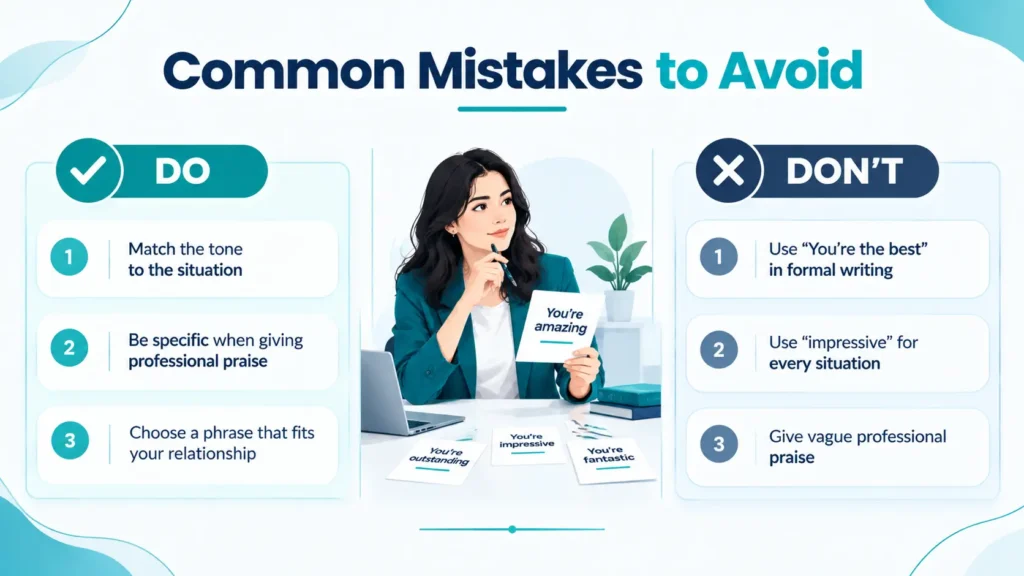
Using “You’re the best” in a formal setting
“You’re the best” is friendly but quite casual. It may not fit a formal business email or professional evaluation.
Using “You’re impressive” for everything
“Impressive” usually works best when there is a particular achievement, skill, or quality worth praising.
Confusing “awesome” with “amazing” in every context
They are close in meaning, but tone matters. “Awesome” is generally more casual, while “amazing” can feel more enthusiastic or heartfelt.
Giving vague professional praise
In workplace situations, a specific compliment is often more useful than simply saying someone is “awesome.”
Instead of:
“You’re awesome at presentations.”
Try:
“Your presentation was clear, well organized, and engaging.”
FAQ
What is the best way to say “you are awesome”?
“You’re amazing” is probably the most natural all-purpose alternative. It works in casual conversations and expresses genuine admiration.
How do you say “you are awesome” professionally?
Try “You did an outstanding job,” “Your work is exceptional,” or “You handled that extremely well.” These phrases sound more appropriate in professional settings.
Is “you’re amazing” better than “you’re awesome”?
Neither is universally better. “You’re awesome” sounds more casual, while “you’re amazing” can sound warmer or more enthusiastic.
What is a cute way to say “you are awesome”?
“You’re the best!” is a warm, casual choice. You can also say “You’re absolutely wonderful!” when you want the compliment to feel more heartfelt.
How do you compliment someone’s skills?
Be specific. Instead of simply saying “You’re awesome,” try “You’re amazing at this,” “You’re incredibly talented,” or “You’re really good at what you do.”
Can I say “you’re awesome” at work?
Yes, especially in casual workplace conversations. However, for formal feedback, emails, or performance reviews, a specific phrase such as “You did an excellent job” is usually more suitable.
Conclusion
There are plenty of natural ways to say “you are awesome,” but the right expression depends on your relationship with the person and the situation. Use “you’re amazing” for a versatile compliment, “you’re the best” for casual appreciation, and “you did an outstanding job” when you want professional, specific praise.

Role: English Language & Communication Writer
Daniel Carter is an English language writer specializing in workplace communication, professional vocabulary, resumes, emails, and career-focused English.