

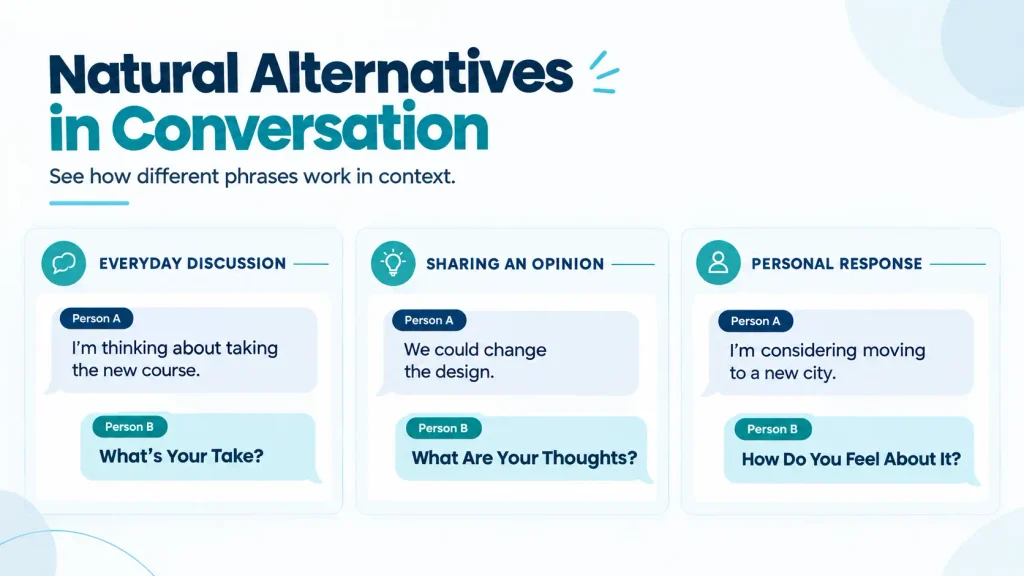
If you want another way to say “What do you think?”, you can use phrases such as “What’s your opinion?” “How do you feel about it?” “What’s your take?” “What are your thoughts?” or “Do you have any thoughts on this?” The best choice depends on whether you want to sound casual, polite, professional, or more conversational.
Key Takeaways
- “What do you think?” is a natural way to ask for someone’s opinion or reaction.
- “What’s your take?” sounds casual and conversational.
- “What are your thoughts?” works well in professional and everyday settings.
- “How do you feel about it?” focuses more on someone’s personal reaction.
- “What’s your opinion?” is clear and neutral.
- Some alternatives are better suited to emails, meetings, friends, or informal conversations.
What Does “What Do You Think?” Mean?
“What do you think?” is a common question used to ask someone for their opinion, reaction, judgment, or ideas about something.
For example:
I’m thinking about changing the design. What do you think?
The phrase is flexible and can be used with friends, coworkers, family members, or in casual conversations. However, you may want a different expression to make your question sound more professional, polite, friendly, or specific.
15 Other Ways to Say “What Do You Think?”

1. What Are Your Thoughts?
“What are your thoughts?” is one of the closest alternatives to “What do you think?” It sounds natural, polite, and slightly more professional.
Example:
We’ve finished the first draft. What are your thoughts?
Best for: Professional conversations, meetings, emails, and general discussions.
2. What’s Your Opinion?
“What’s your opinion?” directly asks someone for their view on a subject.
Example:
What’s your opinion on the new company policy?
This phrase is clear and neutral, although it can sound a little more formal than “What do you think?”
Best for: Discussions, professional settings, and serious topics.
3. What’s Your Take?
“What’s your take?” is a casual way to ask for someone’s opinion or interpretation.
Example:
I’ve read the proposal. What’s your take?
It sounds natural in conversations and workplace discussions where the tone is relaxed.
Best for: Casual conversations and informal workplace discussions.
4. How Do You Feel About It?
This question asks about someone’s personal reaction or feelings rather than simply their opinion.
Example:
We’re considering moving the meeting to Friday. How do you feel about it?
Use this phrase when the person’s emotional response or level of comfort matters.
Best for: Personal conversations, decisions, and situations involving preferences.
5. What Do You Make of It?
“What do you make of it?” asks someone for their interpretation or judgment.
Example:
The results were quite unexpected. What do you make of them?
It can suggest that you’re interested in how someone understands a situation.
Best for: Discussing news, events, results, or confusing situations.
6. How Do You See It?
“How do you see it?” asks someone to explain their perspective.
Example:
There are arguments on both sides. How do you see it?
This phrase is useful when you want to understand someone’s point of view.
Best for: Discussions, debates, workplace conversations, and decision-making.
7. What’s Your View?
“What’s your view?” is a concise and slightly formal way to ask for an opinion.
Example:
What’s your view on the proposed changes?
It works especially well when discussing an issue or decision.
Best for: Professional, academic, and formal discussions.
8. What’s Your Perspective?
“What’s your perspective?” focuses on how someone understands or approaches an issue.
Example:
You’ve worked on similar projects before. What’s your perspective?
This option can sound more thoughtful and professional than the simple “What do you think?”
Best for: Workplace discussions, interviews, meetings, and serious conversations.
9. Do You Have Any Thoughts?
“Do you have any thoughts?” is a polite and flexible way to invite feedback.
Example:
I’ve attached the revised proposal. Do you have any thoughts?
It doesn’t pressure the other person to give a strong opinion, making it useful when asking for feedback.
Best for: Emails, workplace communication, feedback, and collaborative projects.
10. What Are Your Impressions?
“What are your impressions?” asks about someone’s overall reaction or initial judgment.
Example:
You’ve just met the new manager. What are your impressions?
It is especially useful when someone has recently experienced, seen, or reviewed something.
Best for: First reactions, reviews, interviews, and professional discussions.
11. How Does That Sound?
“How does that sound?” asks whether someone likes, accepts, or feels comfortable with an idea or suggestion.
Example:
We could meet tomorrow afternoon. How does that sound?
It is more specific than “What do you think?” because it often focuses on a proposed plan.
Best for: Suggestions, plans, invitations, and everyday conversations.
12. What’s Your Reaction?
“What’s your reaction?” asks directly how someone responded to something.
Example:
You’ve seen the new design. What’s your reaction?
This phrase focuses more on the person’s immediate response than their carefully considered opinion.
Best for: News, announcements, changes, and personal reactions.
13. Do You Agree?
“Do you agree?” is useful when you want to know whether someone shares your opinion.
Example:
I think we should finish the report today. Do you agree?
Unlike “What do you think?”, this question usually expects a response about agreement or disagreement.
Best for: Discussions, decisions, arguments, and workplace conversations.
14. I’d Like to Hear Your Thoughts
“I’d like to hear your thoughts” is a polite way to invite someone’s opinion.
Example:
I’d like to hear your thoughts before we make a final decision.
It sounds respectful and works particularly well when asking someone to provide meaningful feedback.
Best for: Professional communication, meetings, emails, and collaborative work.
15. What Do You Think About This?
“What do you think about this?” is a slightly expanded version of the original phrase.
Example:
I found this new approach online. What do you think about this?
It remains casual and natural while making the subject of the question clear.
Best for: Everyday conversations, discussions, and informal feedback.
Which Alternative Should You Use?

The best alternative depends on the situation.
| Alternative | Tone | Best Context |
|---|---|---|
| What are your thoughts? | Neutral/professional | Work, emails, discussions |
| What’s your opinion? | Neutral/formal | Serious discussions |
| What’s your take? | Casual | Conversations, informal work |
| How do you feel about it? | Personal | Preferences and reactions |
| What do you make of it? | Conversational | Situations and events |
| How do you see it? | Neutral | Perspectives and discussions |
| What’s your view? | Formal | Professional or academic settings |
| What’s your perspective? | Professional | Work and serious discussions |
| Do you have any thoughts? | Polite | Feedback and emails |
| What are your impressions? | Neutral | First reactions |
| How does that sound? | Friendly | Suggestions and plans |
| What’s your reaction? | Direct | News and changes |
| Do you agree? | Direct | Opinions and decisions |
| I’d like to hear your thoughts | Polite/professional | Meetings and emails |
| What do you think about this? | Casual | Everyday conversation |
What Is the Best Professional Alternative?
For professional communication, “What are your thoughts?” is one of the most natural choices.
For example:
I’ve attached the updated proposal. What are your thoughts?
You could also say:
Do you have any thoughts on the revised plan?
or:
I’d like to hear your thoughts before we move forward.
These options sound polite without being overly formal.
What Is a Casual Way to Say “What Do You Think?”
If you’re talking with a friend or someone you know well, try:
- What’s your take?
- How do you feel about it?
- What do you make of it?
- How does that sound?
- What do you think about this?
For example:
I’m thinking about getting a new laptop. What’s your take?
This sounds relaxed and natural in everyday American English.
“What Do You Think?” vs. “What Are Your Thoughts?”
These phrases are very similar, but there is a small difference in tone.
“What do you think?” is more conversational and direct.
What do you think of the new logo?
“What are your thoughts?” can sound slightly more polished and is common when asking for feedback.
What are your thoughts on the new logo?
Both are natural. The second option may fit better in a professional email or meeting.
Common Mistakes to Avoid
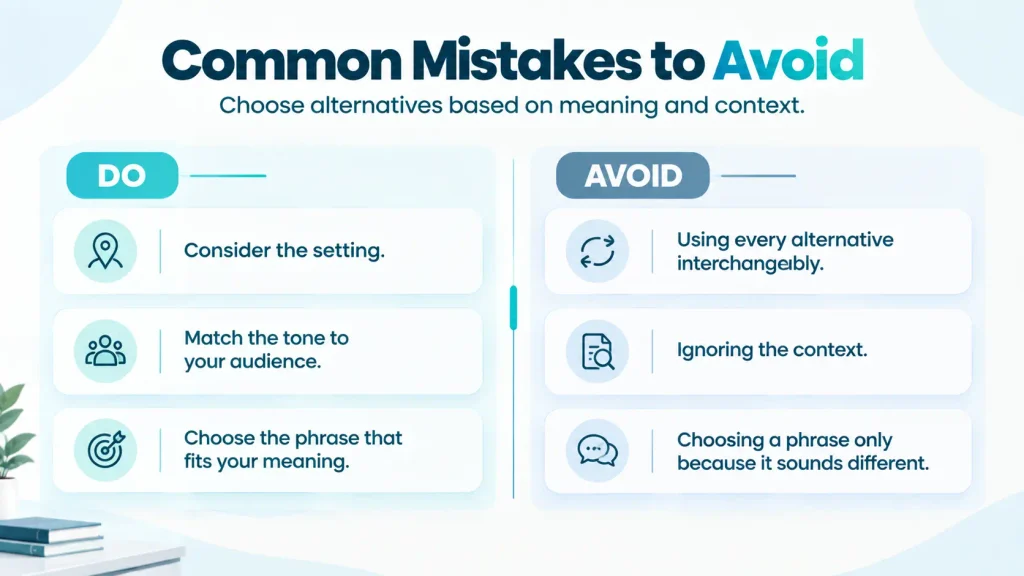
Using a formal phrase in a very casual conversation
Something like “What is your perspective on this matter?” may sound unnecessarily formal when talking to a close friend.
A simpler option would be:
What do you think?
Assuming every alternative means exactly the same thing
Some expressions have a slightly different purpose.
For example, “Do you agree?” asks whether someone shares your opinion, while “What do you think?” gives the person more freedom to express their own view.
Using “How do you feel?” when you only want an objective opinion
“How do you feel about it?” can focus on emotions or personal comfort.
If you simply want someone’s judgment, “What’s your opinion?” or “What are your thoughts?” may be clearer.
Using slang or casual expressions in formal writing
“What’s your take?” is natural, but a more formal email may benefit from:
What are your thoughts on this proposal?
The right phrase depends on the relationship and setting.
Frequently Asked Questions
What is the most natural alternative to “What do you think?”
“What are your thoughts?” is one of the closest natural alternatives. It works in both everyday and professional conversations.
What is a professional way to say “What do you think?”
You can say “What are your thoughts?”, “Do you have any thoughts?”, or “I’d like to hear your thoughts.”
What is a casual way to say “What do you think?”
“What’s your take?” is a natural casual alternative. You can also use “How does that sound?” when asking about a suggestion or plan.
Is “What’s your opinion?” the same as “What do you think?”
They are very similar, but “What’s your opinion?” can sound slightly more formal and direct. “What do you think?” is more common in everyday conversation.
Can I use “What are your thoughts?” in an email?
Yes. “What are your thoughts?” is a natural and polite way to ask for feedback in a professional email.
What can I say instead of “What do you think about this?”
Depending on the context, you can say “What are your thoughts on this?”, “What’s your take on this?”, “How do you feel about this?”, or “What’s your opinion on this?”
What is a polite way to ask for someone’s opinion?
“I’d like to hear your thoughts” is a polite and respectful option. “Do you have any thoughts?” is also useful when asking for feedback without putting pressure on the person.
Final Thoughts
There are many natural ways to ask for someone’s opinion besides “What do you think?” The best choice depends on what you want to communicate.
For professional situations, “What are your thoughts?” and “I’d like to hear your thoughts” work well. For casual conversations, “What’s your take?” feels relaxed and natural. If you’re asking about a personal reaction, “How do you feel about it?” may be a better fit.
Choosing the right expression can make your question sound more natural, precise, and appropriate for the situation.

Role: Author & Contributing Writer
Olivia Bennett is a dedicated Author at Elite’s Collective, focused on delivering clear, well-researched, and engaging articles tailored to the audience.